
|
Getting your Trinity Audio player ready...
|
PRESS RELEASES. From the City of Half Moon Bay on July 16th, 2026 in response to the State of California’s lawsuit aimed at Half Moon Bay. The press releases are in chronological order from beginning to present.
Half Moon Bay, CA. Thursday, July 16, 2026 Response to Start of California
The City of Half Moon Bay is aware of today’s announcement from the State regarding legal action involving five California cities, including Half Moon Bay, related to Housing Element compliance.
The City has been working towards completion of the Cycle 6 Housing Element since 2022, and actively working with the California Department of Housing and Community Development (HCD) over the past several months to complete the remaining steps necessary to achieve compliance with State housing law. In February 2026, HCD determined that the City’s Housing Element meets statutory requirements, with the remaining work focused on required zoning updates to reach full compliance. The City met with HCD several times and established a legally feasible timeline to complete the rezoning work. The City is scheduled to bring the rezonings forward for public review and consideration at a special meeting of its Planning Commission on August 5, 2026. The City will schedule the required public hearing with the City Council later in the month, in accordance with applicable legal processes.
“Half Moon Bay is committed to working collaboratively with our state partners to meet housing requirements and expand housing opportunities for residents at all income levels,” said City of Half Moon Bay Mayor, Debbie Ruddock. “We are continuing to advance the steps needed to move toward compliance, on the schedule agreed upon by the State. Given our ongoing work with HCD and the Coastal Commission, we are surprised that the State feels this additional action is necessary. We’re also disappointed that the State has ignored the fact that the City has made substantial progress on actual housing development programs, including affordable housing for our most vulnerable residents, while continuing to work through the legal process of updating the Housing Element. The whole purpose of this process is to create more housing in our community, which is exactly what Half Moon Bay has achieved.”
As a Coastal community entirely within the California Coastal Zone, Half Moon Bay must complete additional processes to amend its Local Coastal Program (LCP), including review and certification by the California Coastal Commission. The City has coordinated with both HCD and Coastal Commission staff to navigate these requirements and advance the process as efficiently as practicable. Both HCD staff and Coastal Commission staff already completed their review of the rezoning and provided feedback on June 10, 2026. This came after several meetings with HCD staff on the required amendments, including reviewing timelines and feedback. Since the City began working on the rezonings in February 2026, City staff have met with HCD six times, and addressed all recommended changes. Staff remain committed to completing these rezonings within the agreed upon, legally feasible timeframe, and taking all necessary steps to achieve compliance with state law.
Certification of the City’s Housing Element was delayed for approximately a year, from November 2024 to November 2025, as the City coordinated with HCD and the Coastal Commission to align on housing regulations that were already included in the City’s certified LCP. This period ensured that all processes and regulations were fully reconciled before moving forward.
The City has made progress toward its housing goals. Between 2023 and 2025, Half Moon Bay added 144 new housing units, including developments that serve a range of income levels. The City has also approved and has active projects that will add an additional 100 units of affordable housing which would achieve more than 40% of its affordable housing goal during the first half of this cycle. With additional projects in the development pipeline and sites identified in the Housing Element, these efforts position the City to work toward meeting its Regional Housing Needs Allocation (RHNA) goal of 480 units by 2031.
Building on that commitment, the City is continuing efforts to expand housing opportunities that support the local workforce, including: farmworkers, service workers, and families, and that contribute to broader regional housing affordability goals. The City will continue advancing the steps needed to align with state requirements while carrying out its local planning responsibilities consistent with state law. Updates will be provided as the rezoning process progresses.
About the City of Half Moon Bay
Located 28 miles south of San Francisco, the City of Half Moon Bay is a community of about 11,000 people, situated on the peninsula between forested hills and some of the most beautiful coastlines that California has to offer. The Half Moon Bay community prides itself on being welcoming, inclusive, diverse, and supportive of all who live and work here. Its historic downtown features shops, galleries, restaurants, and other businesses, and its celebrated beaches and parks are wonders of nature, accessible to pedestrians, bicyclists, and equestrians.
Attorney General Bonta, Newsom Administration Take Legal Action Against Local Governments for Failing to Comply with California’s Housing Element Law
OAKLAND, July 16th, 2026 — California Attorney General Rob Bonta and the California Department of Housing and Community Development (HCD) today announced enforcement actions against five local governments that have failed to comply with California’s Housing Element Law. The actions are part of a coordinated effort by Governor Gavin Newsom, HCD, and the Attorney General’s Office to achieve statewide compliance with the law by the end of the year. Under California’s Housing Element Law, every city and county must update its housing plan every eight years to meet its Regional Housing Needs Allocation, or its share of the regional and statewide housing needs.
California is currently in the sixth “housing element update cycle,” which requires local governments to plan for approximately 2.5 million additional homes statewide — the most ambitious housing planning effort in the state’s history. As this planning period concludes, HCD identified local governments across the state that remained out of compliance with the Housing Element Law. While two-thirds of those jurisdictions have since come into compliance or are expected to do so in the coming months, HCD referred five jurisdictions that are still out of compliance to the Attorney General’s Office for enforcement, resulting in the legal actions announced today.
“California’s housing crisis demands action, not excuses,” said Attorney General Rob Bonta. “Jurisdictions that remain out of compliance with our Housing Element Law are standing in the way of the homes Californians need. We are well past the halfway point of the current housing planning cycle, and timely compliance is not optional. As I’ve said many times, no local government has to solve this challenge alone, but every local government has to do its fair share. Today, we’re showing how serious we are about ensuring that every city and county in California adopts a housing element. Restoring the California dream will take an all-hands-on-deck effort.”
“California can’t solve the housing crisis while some cities sit on their hands and dare us to do something about it,” said Governor Gavin Newsom. “These five jurisdictions had every chance to follow the law and plan for their fair share of housing. They chose not to, so now they’ll answer for it in court. Housing law applies statewide, and no city gets a pass.”
“The vast majority of California’s cities and counties have stepped up to achieve housing element compliance,” said HCD Director Gustavo Velasquez. “For the small number that are still falling short, the actions we are taking today should send a clear message: no community is exempt from doing its part to solve our housing crisis. Alongside Attorney General Bonta, Governor Newsom and HCD will continue to hold local governments accountable for complying with state law.”
The following five jurisdictions are being held accountable for failing to meet their obligations under the Housing Element Law:
- Calexico (writ petition filed in Imperial County Superior Court)
- Costa Mesa (writ petition filed in Orange County Superior Court)
- Half Moon Bay (writ petition filed in San Mateo County Superior Court) <<<<
- Ridgecrest (writ petition filed in Kern County Superior Court)
- Turlock (writ petition filed in Stanislaus County Superior Court)
HCD provided the jurisdictions multiple opportunities to address violations before referring them to the Attorney General’s Office for enforcement, issuing notices of violation and written findings, allowing each jurisdiction 30 days to submit a written response, and offering two meetings to discuss the violations and potential solutions. With HCD’s guidance and technical assistance, coupled with enforcement, over 95% of California communities have attained housing element compliance in the sixth cycle.
Writ petitions — legal actions asking a court to require jurisdictions to follow the law — have been filed against these jurisdictions in the Attorney General’s independent capacity and on behalf of HCD. Jurisdictions may resolve their violations by entering into consent decrees or stipulated judgments establishing a streamlined timeline for achieving compliance. The Attorney General and Newsom Administration may file additional writ petitions against cities and counties that remain out of compliance after receiving notices of violation from HCD.
Under a recent law sponsored by Attorney General Bonta — Senate Bill 1037 (Wiener, 2024), which was signed into law and took effect January 1, 2025 — local governments are liable for civil penalties for each month that they failed to timely comply with the Housing Element Law. Penalties collected are deposited into the Building Homes and Jobs Trust Fund, which supports the development of affordable housing located in the affected jurisdiction. And under California’s Housing Accountability Act (HAA), failure to adopt a timely and compliant local housing plan triggers the so-called “Builder’s Remedy.” Once subject to the Builder’s Remedy, a local government generally may not deny certain housing projects — in particular, those that include certain thresholds of low- or moderate-income units — for inconsistency with zoning or land use designation.
The housing element is a crucial tool for building housing for moderate-, low-, and very low-income Californians and redressing historical redlining and disinvestment. State income limits for what constitutes moderate-, low-, and very low-income Californians vary by county and can be found here. Among other things, a compliant housing element must include an assessment of housing needs, an inventory of resources and constraints relevant to meeting those needs, and programs to implement the policies, goals, and objectives of the housing element. Once adopted, a housing element is implemented through zoning ordinances and other actions that put its objectives into effect and facilitate the construction of new homes for Californians at all income levels.
In close partnership with the Newsom Administration, Attorney General Rob Bonta has been laser focused on promoting affordability by tackling California’s housing shortage and ensuring local governments meet their obligations under state housing law. Together, they have reached settlement agreements with the cities of Hollister, Artesia, La Habra Heights, Malibu, Fullerton, Coronado, and San Bernardino, securing commitments from these jurisdictions to bring their housing plans into compliance.
PRESS RELEASE. From the Office of the Governor.
OAKLAND, on July 16th, 2026. – Moving to hold five California cities accountable for refusing to comply with state law requiring them to plan for their share of the state’s housing needs, Governor Gavin Newsom today escalated the crackdown on local governments standing in the way of new housing.
California can’t solve the housing crisis while some cities sit on their hands and dare us to do something about it. These five jurisdictions had every chance to follow the law and plan for their fair share of housing. They chose not to, so now they’ll answer for it in court. Housing law applies statewide, and no city gets a pass.
The actions filed today are part of the state’s plan to ensure every last jurisdiction does its part to solve for the state’s housing needs. With this sixth housing planning cycle nearing its end, the vast majority of jurisdictions have adopted a compliant housing element and met the requirements of the law. The jurisdictions named in today’s legal action are falling behind, with all at least two and a half years past the compliance deadline. The five cities are Calexico, Costa Mesa, Half Moon Bay, Ridgecrest, and Turlock.
“California’s housing crisis demands action, not excuses,” said Attorney General Rob Bonta. “Jurisdictions that remain out of compliance with our Housing Element Law are standing in the way of the homes Californians need. We are well past the halfway point of the current housing planning cycle, and timely compliance is not optional. As I’ve said many times, no local government has to solve this challenge alone, but every local government has to do its fair share. Today, we’re showing how serious we are about ensuring that every city and county in California adopts a housing element. Restoring the California dream will take an all-hands-on-deck effort.”
“The vast majority of California’s cities and counties have stepped up to achieve housing element compliance,” said Housing and Community Development (HCD) Director Gustavo Velasquez. “For the small number that are still falling short, the actions we are taking today should send a clear message: no community is exempt from doing its part to solve our housing crisis. Alongside Attorney General Bonta, Governor Newsom and HCD will continue to hold local governments accountable for complying with state law.”
Before making today’s referral, HCD gave each jurisdiction repeated chances to fix the problem. That included formal notices of violation, 30 days for each city or county to respond in writing, and two rounds of meetings to work through solutions before the case ever reached the Attorney General’s Office. Statewide, HCD’s combination of technical assistance and enforcement has pushed housing element compliance above 95% in this cycle.
The state is prepared to file additional writ petitions against any city or county that receives a notice of violation from HCD and fails to act.
The Law These Cities Broke
Since 1969, California has required every city and county to plan for housing at every income level, not just some, through a housing element, a required piece of each jurisdiction’s general plan. Each cycle, HCD assigns every city and county a share of the state’s housing need, and a jurisdiction’s housing element must show, in specific terms, how it will meet that number and clear the barriers standing in the way. HCD reviews and must approve every housing element before it can be adopted. California is in its sixth cycle, with jurisdictions updating their plans every five or eight years.
The stakes aren’t small. Under the state’s Housing Accountability Act, an out-of-compliance jurisdiction is subject to the “Builder’s Remedy,” losing its ability to reject qualifying low- and moderate-income housing projects on zoning grounds. And under Senate Bill 1037, signed into law in 2024, jurisdictions are subject to civil penalties for noncompliance that go towards affordable housing in that same community.
The state has worked in lockstep on housing accountability throughout this cycle, an effort that has already produced settlements with Hollister, Artesia, La Habra Heights, Malibu, Fullerton, Coronado and San Bernardino, each committing to bring its housing element into compliance.
Accountability in action: Huntington Beach
Today’s action follows a May announcement on Huntington Beach, where the state sued the city in 2023 after it refused to update its housing element, more than four years past its legal deadline. In May 2026, a Superior Court judge ordered the city to pay $160,000 in penalties, with fines climbing to $50,000 a month until it comes into compliance. The case shows the consequences of willfully flouting the law.
More housing. More accountability.
Governor Newsom championed the creation of the Housing Accountability Unit at HCD to ensure cities and counties fulfill their legal responsibilities to plan and permit their fair share of housing. Since its establishment, the Housing Accountability Unit has supported the development of 13,541 housing units, including more than 3,852 affordable units, through enforcement actions and by working with local jurisdictions to ensure compliance with housing law. In 2024, the Unit was expanded to include a focus on homelessness issues, including compliance with state laws related to homeless housing.
In addition to today’s announcement and ongoing work to hold local governments accountable to help their residents and improve affordability, Governor Newsom is creating a structural and foundational model that will have positive impacts for generations to come.
The Governor is streamlining and prioritizing the building of new housing, funding new shelters, housing, and supports, holding local governments accountable, addressing mental health and its impact on homelessness through voter-approved Proposition 1, and creating new pathways for those who need it most through updated conservatorship laws and a new CARE court system. California is also addressing encampments statewide to help get people off the streets and into care. All this work is creating positive results.
Last year, as a result of the Governor’s strategies to address the housing and homelessness crisis, for the first time in over 15 years, California’s unsheltered homelessness decreased by 9.5%. While other states and the nation as a whole continue to see homelessness rising, California is reversing a crisis decades in the making.
State Housing Lawsuit ignores Half Moon Bay’s Constraints
Governor Gavin Newsom and California Attorney General Rob Bonta are barking up the wrong tree in suing Half Moon Bay for the city’s alleged failure to meet state affordable housing deadlines.
The city should be commended for diligently planning to meet its state-imposed mandatory goal of 480 units in its current 2023-2031 Housing Element–double the previous state Regional Housing Needs Assessment cycle’s goal of 240 units.
The city is located entirely within the Coastal Zone. Providing for visitors as a priority Coastal Act use requires extra time for the Coastal Commission to certify the city’s new Housing Element policies and requirements.
Underlying Half Moon Bay’s world class scenic beauty, irreplaceable prime farmlands and friendly small-town character are constraints to intensive development, including limited water supply, sewage treatment and highway capacities. Lack of high-quality transit and city areas located within very high fire severity and flood inundation zones are additional challenges.
The city has earnestly worked to ensure compliance with its RHNA mandates and should not be chastised by the Governor, let alone face the cost of defending against this punitive litigation.
Lennie Roberts, Legislative Advocate, Green Foothills
More on the Housing Element on the Coastside (HMB and Midcoast) on Coastside Buzz
More on the Half Moon Bay City Council on Coastside Buzz
Half Moon Bay City Council ~ Meetings ~ 1st & 3rd Tuesdays @ 7:00pm
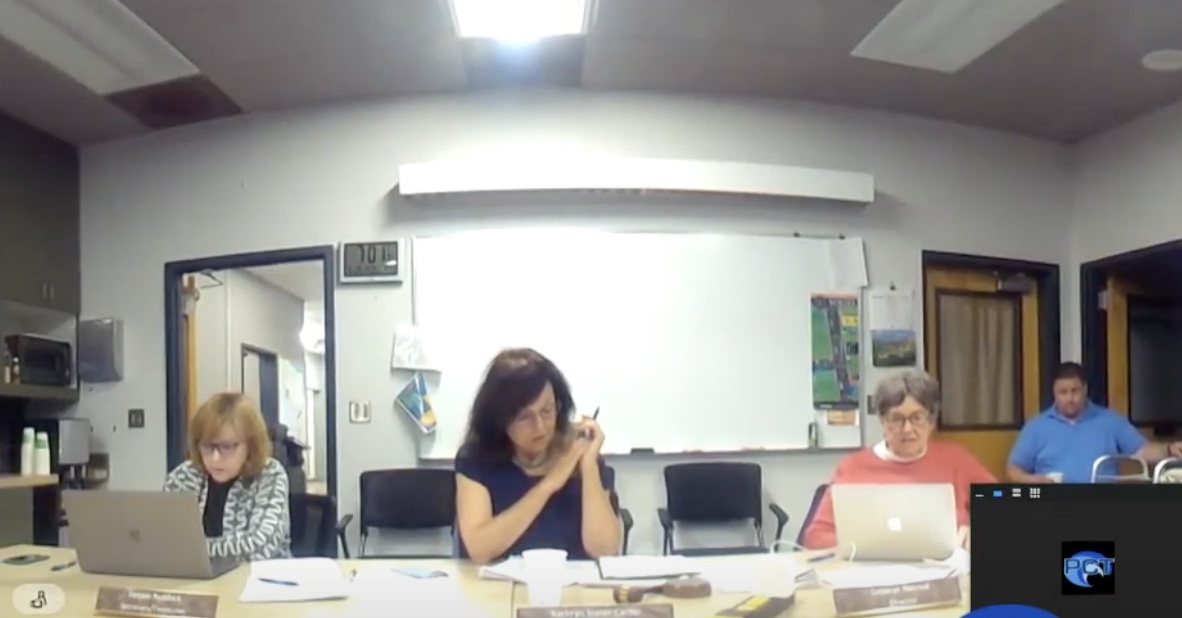
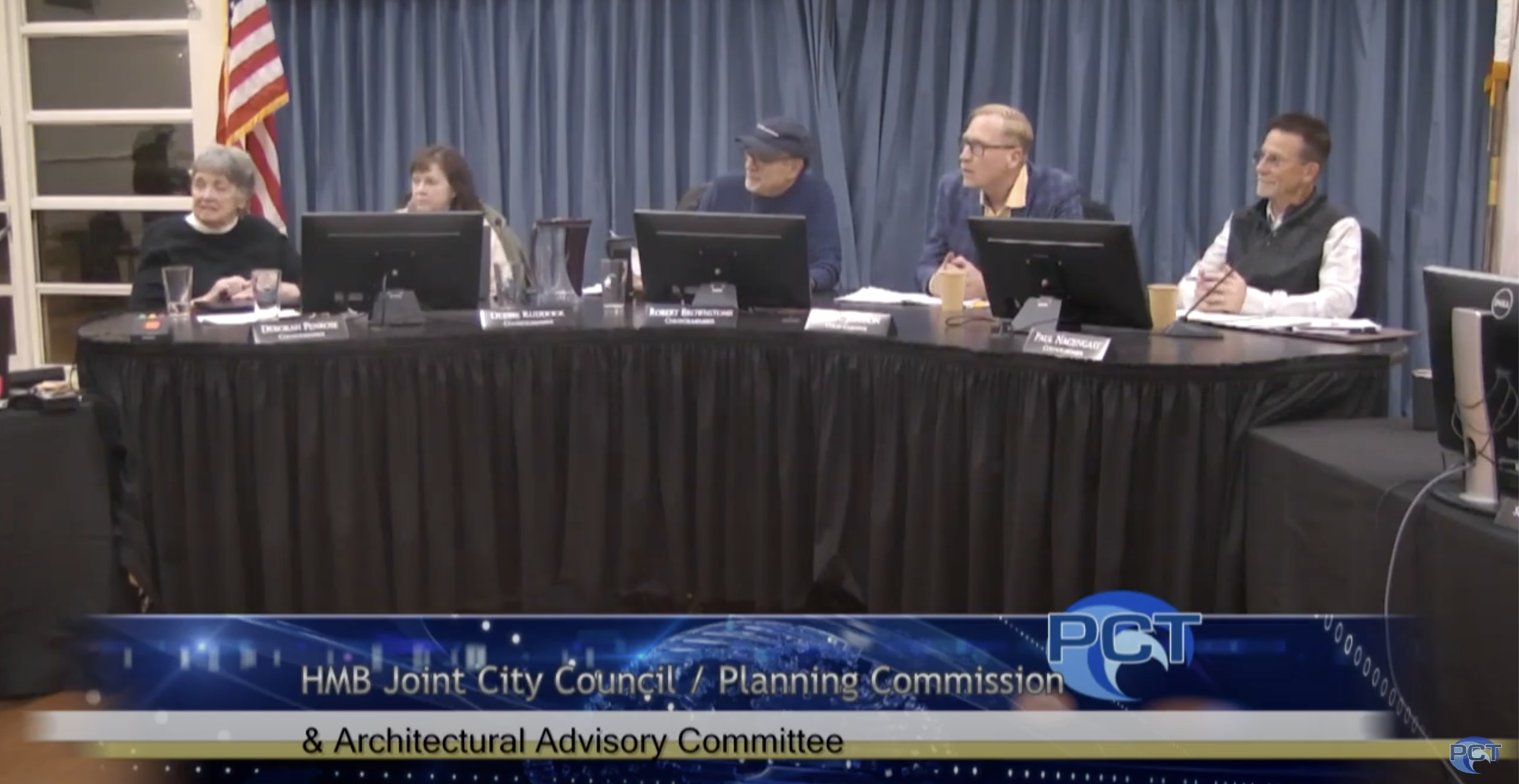
The City Council of Half Moon Bay is the City’s governing body, and consists of five elected members. The Council sets priorities and policies, makes final decisions on all major City matters, adopts ordinances and resolutions, appoints the City Manager and City Attorney, and approves the annual budget.
The Half Moon Bay City Council typically meets on the first and third Tuesday of each month starting at 7:00pm at the Ted Adcock Community Center, 535 Kelly Avenue.
HMB City Council Agendas and Zoom Links
Regular meeting agendas are posted 72 hours in advance.
Special meeting agendas are posted 24 hours in advance.
– Streamed live on Comcast Channel 27 and Pacific Coast TV website
– Facebook Live in English: City of Half Moon Bay FB Page
– Facebook Live in Spanish: City of Half Moon Bay Recreation FB Page
Comments in accordance with the three-minute per speaker limit. The City Clerk will read all comments into the record. Please visit our “Commenting at a City Council Meeting” information page.
– Email the City Clerk, Jessica Blair, at jblair@hmbcity.com prior to or during the meeting
– Facebook live during the meeting
– Phone during the meeting: (650) 477-4963 (English) and (650) 445-3090 (Spanish)
Archived HMB City Council meeting videos on PCTv
Subscribe to HMB’s Agendas, Weekly eNews, Project Updates, City alerts, Calendar Events, Bid Postings.
You can also learn about City Council Procedures and Decorum.
The City Council develops Strategic Elements to help focus the City’s actions and work plans on its key priorities.
Do You Know How the 1953 Brown Act Guides Public Agencies Towards Transparency?
City Council Contact
Phone: (650) 726-8250 (leave message with Clerk’s office)
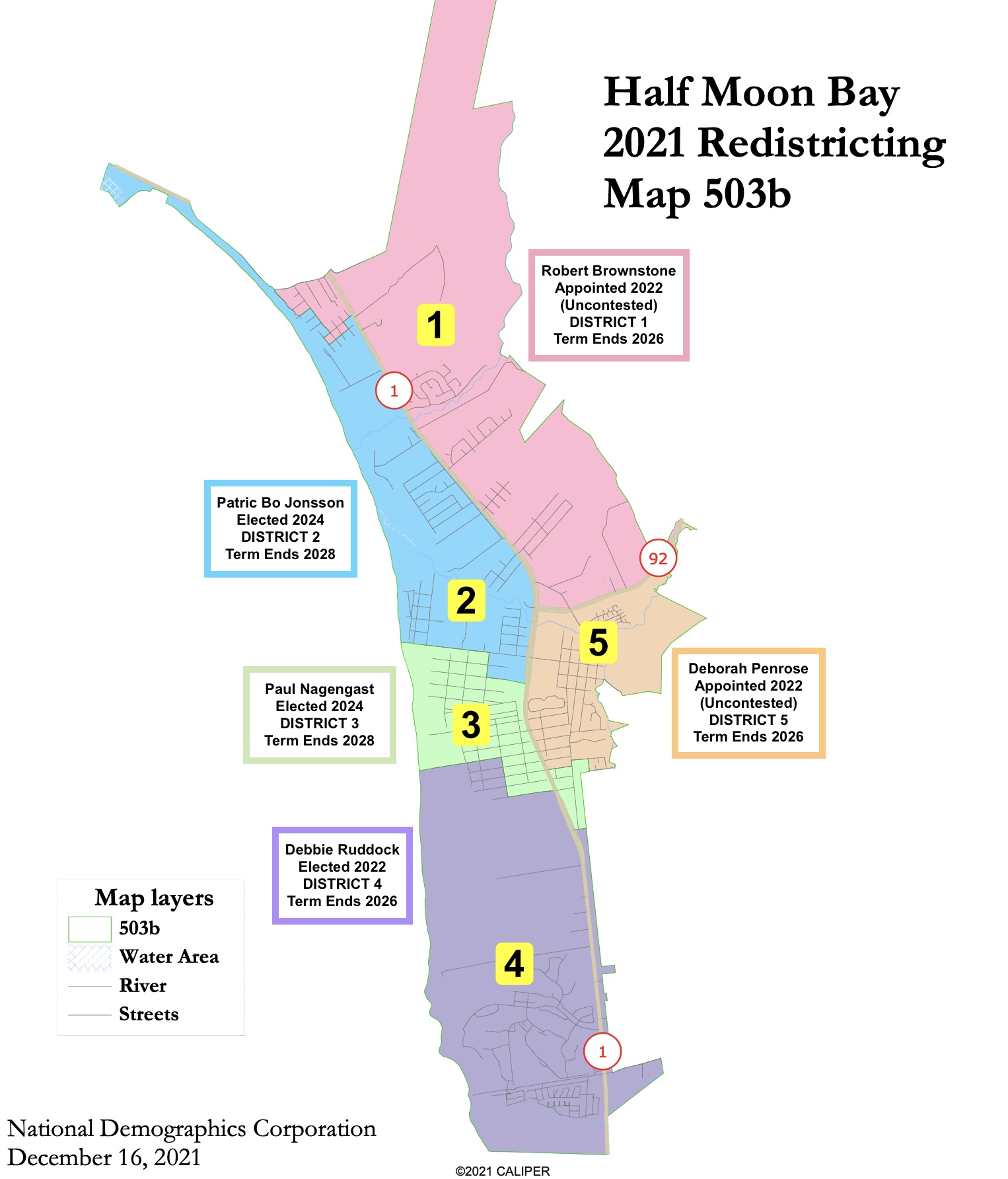
Mayor Robert Brownstone, District 1; Term ends 2026
RBrownstone@hmbcity.com
Vice Mayor Debbie Ruddock, District 4; Term ends 2026
DRuddock@hmbcity.com
Councilmember Deborah Penrose, District 5, Term ends 2026
DPenrose@hmbcity.com
Councilmember Patric Bo Jonsson, District 2, Term Ends 2028
PJonsson@hmbcity.com
Councilmember Paul Nagengast, District 3; Term Ends 2028
PNagengast@hmbcity.com
The City of Half Moon Bay holds district-based elections for its five city council seats. Each Councilmember is elected to a 4 year term. There are no term limits in Half Moon Bay. The City Council selects one of its members to serve as Mayor and one to serve as Vice Mayor, on an annual basis.
- November 2024 Election – Districts 2 and 3 will elect a representative to a four-year term.
- November 2026 Election – Districts 1, 4, and 5 will elect a representative to a four-year term.
Click here to figure out which district you are in. Type your address into the interactive map and it will show you which district you are in.



Author: mdrag
x