
|
Getting your Trinity Audio player ready...
|
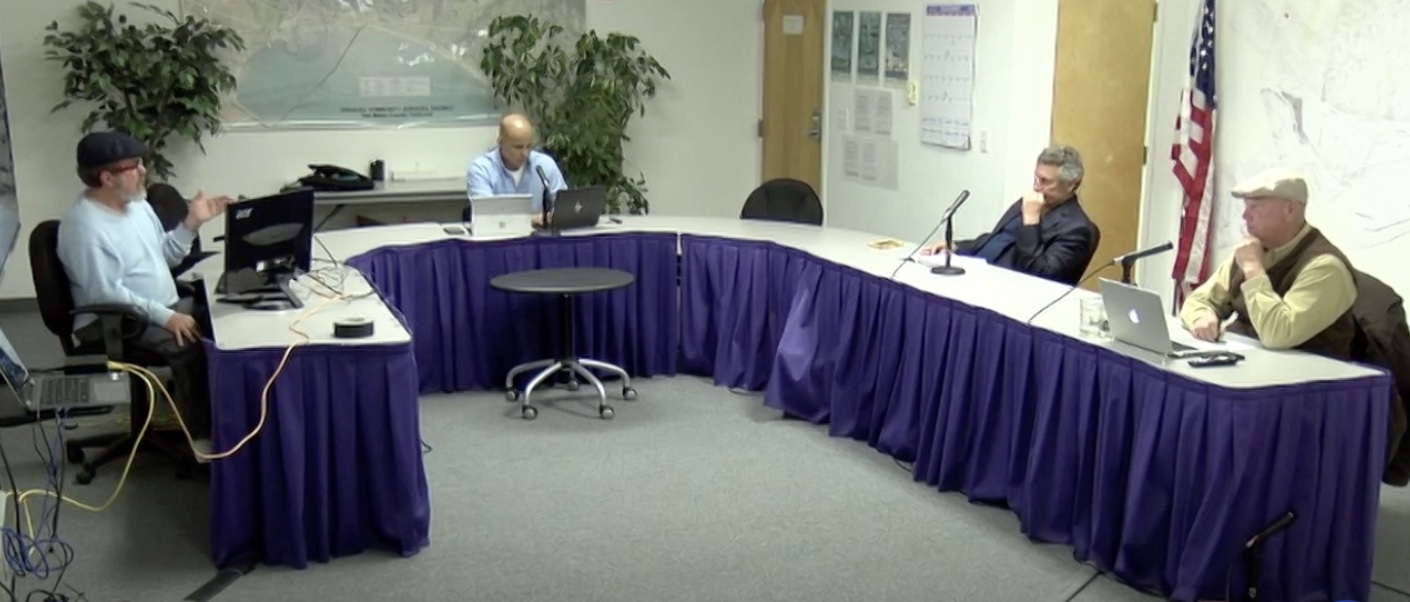
VIDEO. From the San Mateo County Board of Supervisors regular meeting on Tuesday, October 6th, 2026 at 9:00am, as a hybrid meeting with remote comment. Agenda.
Staff Report for Item #11: “Introduction of an ordinance repealing and replacing San Mateo County Ordinance Code Chapter 4.68 concerning wells, and waive reading of the ordinance in its entirety.”
Staff Report for Item #12: “Introduction of Ordinance Updating Chapter 4.64 of the San Mateo County Ordinance Code Concerning Domestic Water Systems“
VIDEO
Item #11, and then Item #12 start at 3:48:18
Staff Report for Item #11: “Introduction of an ordinance repealing and replacing San Mateo County Ordinance Code Chapter 4.68 concerning wells, and waive reading of the ordinance in its entirety.”
To: Honorable Board of Supervisors
From: Colleen Chawla, Chief, San Mateo County Health Charles Ice, Director, Environmental Health Services
Subject: Introduction of Ordinance Updating Chapter 4.68 of the San Mateo County Ordinance Code Concerning Wells
RECOMMENDATION
Introduction of an ordinance repealing and replacing San Mateo County Ordinance Code Chapter 4.68 concerning wells, and waive reading of the ordinance in its entirety.
BACKGROUND
In California, regulatory authority over well construction, alteration, and destruction activities rests with local jurisdictions (cities, counties, or water agencies), who have the authority to adopt local well ordinances that meet or exceed California Department of Water Resources Well Standards, adopted pursuant to California Water Code sections 13800-13806. Permitting of wells and enforcement of applicable standards are carried out by designated local enforcement agencies. The San Mateo County Environmental Health Services Division (Division) is recognized by the California Department of Water Resources as the sole well permitting local enforcement agency in San Mateo County.
The County’s Wells Ordinance (Chapter 4.68) was first adopted in January 2001 and was last amended in November 2002. The County ordinances regulating wells and domestic water supply systems function in tandem, and the Water Supply System ordinance (Chapter 4.64, which the Division suggests renaming to the Domestic Water Systems ordinance) was adopted in January 1977 and has not been amended since. The Division is proposing a comprehensive overhaul of both ordinances to align with current State standards and updated regulatory best practices, and for improved implementation and enforcement of both ordinances.
DISCUSSION
Amendments to the Wells Ordinance (Chapter 4.68) were necessary to:
1) update obsolete sections,
2) realign the ordinance with current State Well Drilling Standards,
3) incorporate additional language to close gaps in the existing ordinance around Accessory Dwelling Unit water demand,
4) adopt penalties for drilling without a permit, and
5) align with changes proposed to the Domestic Water Systems ordinance, including relocating certain provisions of the Wells Ordinance to the Domestic Water Systems Ordinance.
Fees are already in place to obtain full cost recovery for administration of the Wells ordinance.
It is anticipated that 100% of wells will obtain a permit from the Division.
PERFORMANCE MEASURE
| Measure | FY 2026-2027 Estimated | FY 2027-2028 Projected |
| Percent of wells obtaining a permit from the Division | 99% | 100% |
COMMUNITY IMPACT
This ordinance update will positively impact the public health of all individuals who obtain their drinking water from domestic wells in the County, particularly residents living in unincorporated areas. Properly designed and constructed wells provide clean drinking water to some of San Mateo County’s most vulnerable populations. Moreover, the ordinance ensures that other types of wells are constructed safely to minimize negative impacts to the public health and safety of County residents.
CEQA
In accordance with California Environmental Quality Act (CEQA) Guidelines, the proposed ordinance amendments are categorically exempt from further environmental review pursuant to the “Actions by Regulatory Agencies for Protection of the Environment” (14 CCR Section 15308) and the “Common Sense” exemption (14 CCR Section 15061(b)(3)). The exemption for Actions by Regulatory Agencies applies because the ordinance primarily incorporates State standards designed to protect the environment. The Common Sense exemption applies because there is no possibility the activity may have a significant effect on the environment. Passage of the proposed ordinance does not authorize physical development or permit construction activities; additional steps would be required under the ordinance before any well permit could be granted.
FISCAL IMPACT
The Division’s permit fees have already been established in ordinance to fund administration of the proposed ordinance. There is no Net County Cost associated with this ordinance.
Staff Report for Item #12: “Introduction of Ordinance Updating Chapter 4.64 of the San Mateo County Ordinance Code Concerning Domestic Water Systems”
To: Honorable Board of Supervisors
From: Colleen Chawla, Chief, San Mateo County Health Charles Ice, Director, Environmental Health Services
Subject: Introduction of Ordinance Updating Chapter 4.64 of the San Mateo County Ordinance Code Concerning Domestic Water Systems
RECOMMENDATION
Introduction of an ordinance repealing and replacing San Mateo County Ordinance Code Chapter 4.64 concerning domestic water systems, and waive reading of the ordinance in its entirety.
BACKGROUND
The County’s water supply system ordinance (Chapter 4.64 of San Mateo County Ordinance Code) was last updated in 1977 and is outdated, lacking alignment with current State regulations and policies governing domestic water supplies. The County’s Wells Ordinance (Chapter 4.68) was first adopted in January 2001 and was last amended in November 2002. These two ordinances function in tandem, and Environmental Health Services (EHS) is proposing a comprehensive overhaul of both ordinances to align with current State standards and updated regulatory best practices and for improved implementation and enforcement of both ordinances.
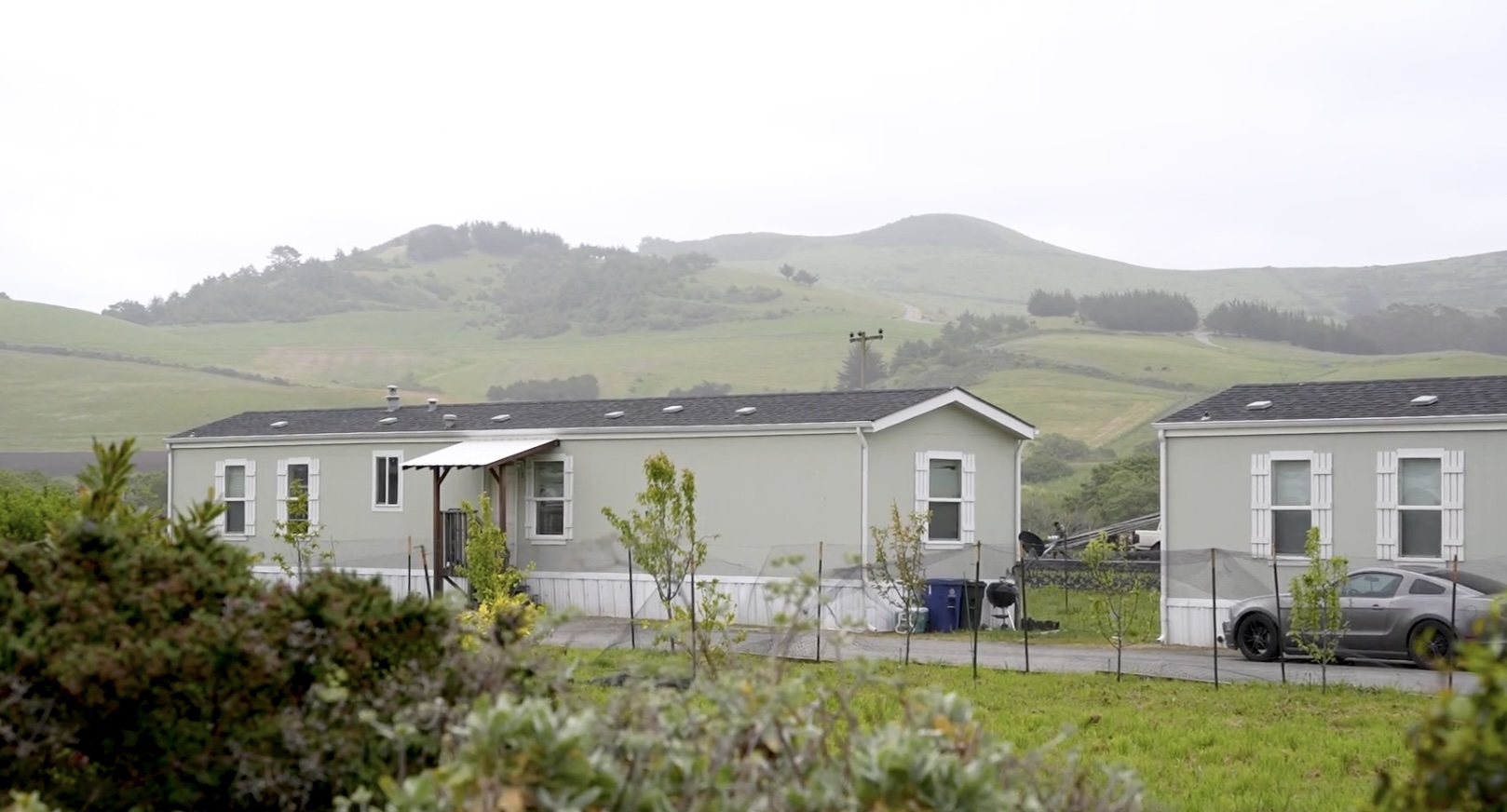
In addition, the proposed Domestic Water Systems ordinance seeks to regulate Farm Labor Housing Water Systems. In 2023, the County of San Mateo created the Farmworker Housing Compliance Task Force (Task Force) consisting of inspection and compliance personnel from multiple County departments. The Task Force had two goals:
(1) proactively identify and locate all farmworker housing on agricultural and ranch lands within the unincorporated area, whether permitted or illegally constructed; and
(2) inspect such housing and work with property owners to ensure that all units comply with minimum health and safety standards.
The Task Force determined that of the 124 active agricultural and ranch operations in unincorporated San Mateo County, 56 operations are providing 145 farmworker housing units occupied by an estimated 356 farmworkers.
Inspections were based on conditions observed during the onsite visit and focused on essential health and safety issues, including waste disposal and water supply. In addition to evaluating any plumbing or connection issues with the water service to the farmworker units, the Task Force tested water samples for the presence of bacteria whenever the water source serving farmworker units was not already subject to regular testing and reporting under State law. Samples were collected from 38 water systems. Through such testing, the Task Force identified 21 domestic water systems (55% of water systems tested) on properties serving an estimated 35 farmworker units that tested positive for coliform and/or E. coli bacteria, which posed a primary public health threat to the water users. In those cases, inspectors required operators to perform disinfection of the water source and piping, make repairs, or install more permanent treatment systems for the water to eliminate any ongoing threat from bacteria in the water supply. Where appropriate, inspectors issued boil water notices until mitigation or correction was completed.
Current statewide water system regulations require testing and inspections generally only for water systems with five or more service connections, e.g., residences or living units. Under this existing framework, Farm Labor Housing generally with five or more service connections is regulated by statewide regulations and County Ordinance, but those with four or fewer residences or living units are exempt from these extensive regulations. Without additional protections, County enforcement for systems with four or fewer connections is presently limited to protecting tenants from substandard housing conditions that constitute an imminent health hazard.
DISCUSSION
Based on findings from the Task Force, EHS determined that a more robust regulatory system would most effectively improve public health protections for farm laborers residing in residences provided by their employers. The proposed ordinance would add robust protections to the County’s existing water systems ordinance for water systems with one to four service connections serving any Farm Labor Housing.
| 15+ Service Connections | 5-14 Service Connections | 1-4 Service Connections | |
| Current Oversight | State Water Resources Control Board | EHS | None |
| Proposed Oversight | State Water Resources Control Board | EHS | EHS (for Farm Labor Housing only) |
Using the least restrictive Statewide laws for regulated water systems (State Small Water System framework) as a guide, EHS proposes to extend the following to Farm Labor Housing water systems: proactive, regular inspections, robust drinking water quality and quantity requirements; and regular ongoing bacteriological and chemical water quality monitoring, among other regulatory processes and protections.
The proposed amendments to Chapter 4.64 are necessary to
1) incorporate proposed regulation of Farm Labor Housing water systems,
2) update obsolete sections of Chapter 4.64,
3) align with proposed updates to Chapter 4.68 (Wells), including relocating certain provisions of the Wells Ordinance to the Domestic Water Systems Ordinance,
4) align with current State regulations,
5) codify administrative policies,
6) strengthen enforcement language for noncompliance,
7) add language specifically addressing landlord responsibilities pertaining to water quality, and
8) codify language pertaining to water quality and quantity requirements for domestic water systems.
Based on feedback received during outreach to the California Farm Bureau, the County’s Agricultural Advisory Commission, and the Pescadero Area Management Council in October 2025 and August 2026, modifications were made to reduce the proposed fee by decreasing the frequency of onsite inspections while increasing the number of bacteriological samples to be self-collected and analyzed. EHS will propose a resolution adopting the following fees concurrently with the Board’s adoption of the final ordinance, if adopted.
| 2026 Fees | Frequency of Inspections | Number of Bacteriological Samples Self-Collected and Analyzed | |
| Initial Proposal | $2,296 | 1 every 3 years | 1 per year |
| Current Proposal | $1,705 | 1 every 5 years | 4 per year |
To obtain full cost recovery for administration of the annual Farm Labor Housing Water System permit established in the proposed ordinance, at the time of adoption of the ordinance, EHS will request this Board adopt a resolution establishing a fee of $1,706 for the associated permit, with fees to administer this program not going into effect until July 1, 2027. However, the County has committed to providing funding to support Farm Labor Housing efforts in EHS through FY 2029-2030. As such, the County will delay implementing full cost recovery for three years by subsidizing a percentage of the permit fee cost through June 2030. The proposed subsidy of fees is 50% in FY 2027-28 and FY 2028-29 and 25% in FY 2029-30:
| Fee Subsidy Percent | |
| FY2026-27 | 100% |
| FY2027-28 | 50% |
| FY2028-29 | 50% |
| FY2029-30 | 25% |
| FY2030-31 and beyond | 0% |
The County Attorney’s Office has reviewed the ordinance as to form.
It is anticipated that 95% of Farm Labor Water Systems will be tested with no water quality issues.
PERFORMANCE MEASURE
| Measure | FY 2026-2027 Estimated | FY 2027-2028 Projected |
| Percentage of Farm Labor Water Systems tested with no water quality issues | 45% | 95% |
COMMUNITY IMPACT
This ordinance positively impacts the health of San Mateo County residents who are employed in the local agricultural industry through the institution of strong public health-oriented policies. Implementation of a Farm Labor Housing Water System permitting program and the monitoring of the water supply to residents may help prevent waterborne illnesses, as well as addresses housing inequities in largely immigrant communities. Proactive oversight has the potential for significantly impacting historically underserved residents by providing an additional level of oversight of housing that does not currently fall within an existing regulatory framework.
CEQA
In accordance with California Environmental Quality Act (CEQA) Guidelines, the proposed ordinance amendments are categorically exempt from further environmental review pursuant to the “Actions by Regulatory Agencies for Protection of the Environment” (14 CCR Section 15308) and the “Common Sense” exemption (14 CCR Section 15061(b)(3)). The exemption for Actions by Regulatory Agencies applies because the ordinance primarily incorporates State standards designed to protect the environment or requires stricter compliance than the State standards. The Common Sense exemption applies because there is no possibility the activity may have a significant effect on the environment. Passage of the proposed ordinance and adoption of the fee resolution does not authorize physical development or permit construction activities; additional steps would be required under the ordinance before any permits could be granted.
FISCAL IMPACT
EHS permit fees will be established by resolution to fund this program. Notwithstanding the fee offsets through June 30, 2030, there is no Net County Cost associated with this ordinance if such fees are adopted.
San Mateo County Board of Supervisors (BoS) Agendas
The Supervisors meet on the 2nd and 4th Tuesdays of the month at 9:00am, as a hybrid meeting.


Author: mdrag
x