
|
Getting your Trinity Audio player ready...
|
BILL and VIDEO. The original bill’s text and status from California Legislative Information.
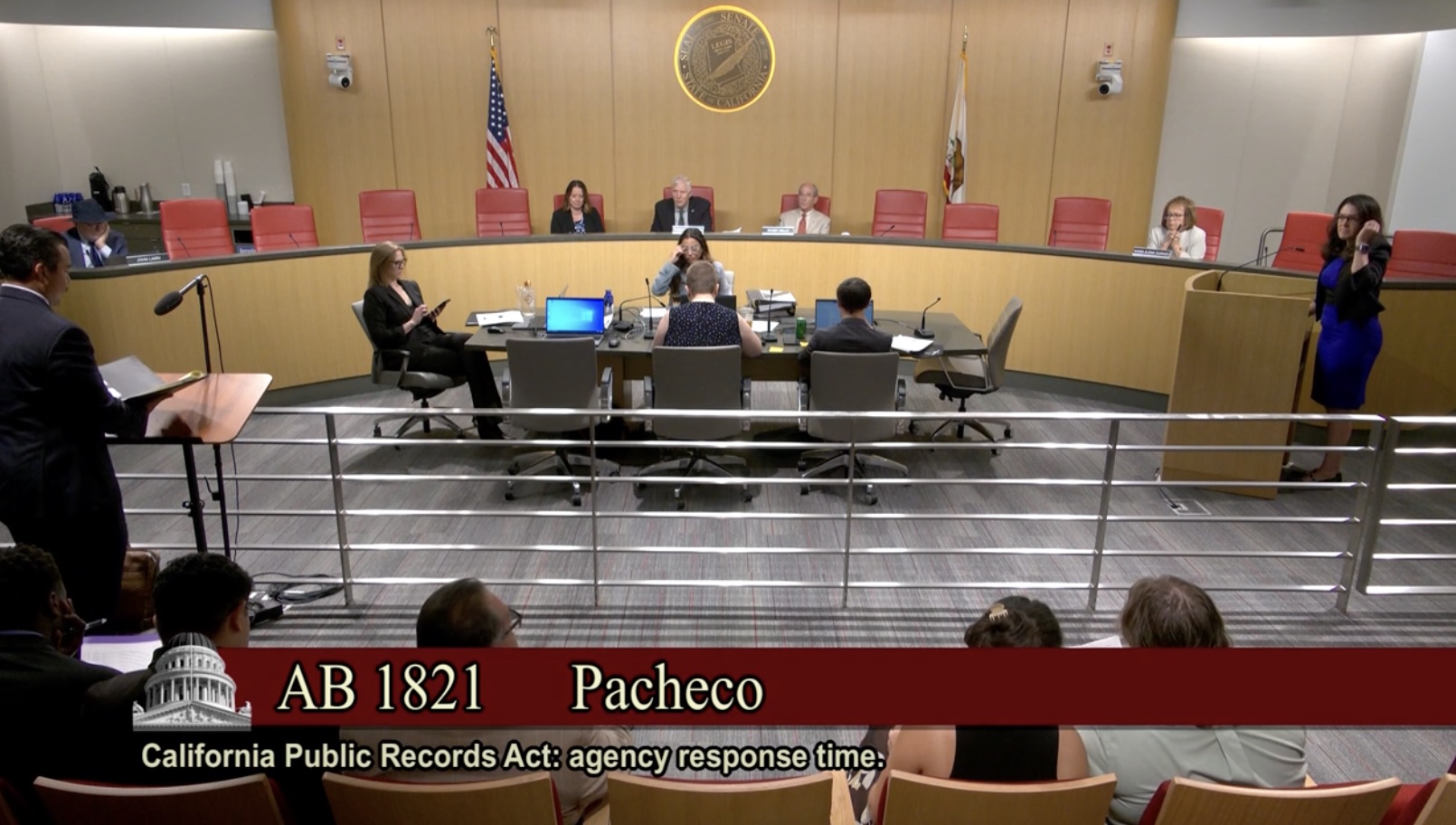
Video from Calmatters Digital Democracy of Senate Standing Committee on Judiciary on June 25th, 2026. Assemblymember, 64th District, Blanca Pacheco, speaks:
Blanca Pacheco: “Okay. Thank you. And I believe it’s still kind of morning. Good morning or afternoon. Mister Chair and senators, I’m here to present AB 1821, which makes a modest change to help local agencies managing the increasing volume of public records requests.
I have amended the bill to align public records act response timelines with business days, creating more realistic and workable deadlines while preserving public access to records and response responding to feedback we have received. I wanna make clear that public access to government records is an essential part of our democracy. That principle does not change with this bill. What has changed is a surge in both the volume and complexity of public records requests.
Agencies across the state are experiencing a sharp increase in requests that are exceptionally broad, time-intensive, and costly to process.
In some cases, requests span years of records, require the review of hundreds of thousands of documents, and take months or longer to complete. My home city of Downey has seen a 73% increase in records requests since 2019. The city of Chula Vista spent more than 1,000 days processing a single request involving over 8,000 records that were never ex accessed. The City of Fontana received 112 complex requests from one individual who explicitly stated that their intent was to disrupt municipal operations due to a personal dispute.
In Donville, one request sought all emails sent to the public over a three-year period.
An estimated 350,000 emails requiring review review and production. In this example, the requester specified their intent was to gather data to train a large language model AI system. Similarly, other Bay Area agencies have received expansive public records request from gov DPT, a commercial platform focused on government contracting. One request sought five years of all external communications between members of a city council and the public, requiring the collection and review of a substantial amount of records.
Many online real estate companies use public records to update and add information on their websites using taxpayer funded staff times to support profit generating platforms.
Regardless of the intent, requests at this scale require significant time and resources to process. These kinds of requests slow down responses for everyone else, including journalists and community members using the system in good faith and pull public employees away from the core responsibilities that residents rely on. This surge has exposed a gap in current law. Currently, timelines are cal are calculated in calendar days, while the work of reviewing happens during business day hours.
When staff are facing review of 350,000 emails, the calendar day calculation creates a logistical mismatch that makes providing accurate timelines and communicating clearly with request requesters more difficult.
AB 1821 addresses this issue by calculating response timelines in business days rather than calendar days. While this bill now takes a much narrower approach, the underlying challenge remains. When agencies are overwhelmed by massive commercial or bad-faith requests, other requesters wait longer, and public employees are pulled away from their core responsibilities. And with me today to testify are Eric Lawyer on behalf of the California State Association of Counties and Johnnie, Johnnie Pinawith Cal Cities.
And they’re also here to answer any technical questions and now we’ll hand it over to my witnesses.”
>>> READ MORE

Author: mdrag
x