

|
Getting your Trinity Audio player ready...
|
ARTICLE. From Maven’s Notebook July 21st, 2025.
Historically, millions of salmon returned to California’s rivers each year. Today, those numbers have plummeted to a fraction of their former levels, with hatcheries now playing a vital role in sustaining the remaining populations. A decade of severe drought, punctuated by sporadic rain and snow events, has further worsened the challenges facing salmon.
The California Salmon Strategy, introduced in January 2024, is a state-led initiative aimed at combating the alarming decline in salmon populations, which has been driven by factors such as drought and climate change. The strategy outlines key priorities and actions to support the restoration of these iconic fish.
At the June meeting of the California Water Commission, Sheena Holley, Salmon Strategy Implementation Coordinator for the Department of Fish and Wildlife; Marc Commandatore, Statewide Restoration Initiatives Branch Manager at the Department of Water Resources; and Erik Ekdahl, Chief Deputy Director at the Water Board, provided Commissioners with an update on the progress of the salmon strategy’s implementation.
California’s Salmon Diversity

California is home to four major species of salmon: chinook, coho, pink, and chum. Among these, chinook and coho dominate the state’s waterways. Chinook salmon are particularly remarkable due to their four genetically distinct run times, which align with the seasons when adults return to freshwater to spawn. For example, spring-run chinook make their journey back to rivers in the spring.
Salmon play a critical role in maintaining healthy ecosystems. They provide a vital food source for numerous species and enrich habitats by transporting nutrients from the ocean to freshwater systems.
Despite their ecological importance, California’s salmon populations are in steep decline. This year marked the third consecutive closure of the commercial fall-run salmon fisheries, with only limited recreational harvests permitted. These closures reflect the dire state of salmon populations, which are being pushed to the brink by poor river and ocean conditions, climate change, and habitat degradation.
The situation is especially critical for spring-run and winter-run chinook salmon, both of which are listed as threatened or endangered at the state and federal levels. These populations face moderate to high extinction risks due to their small numbers and fragile demographics.
“The Sacramento River winter run is a particularly important salmon run because they exhibit a life history strategy found nowhere else on the West Coast,” explained Sheena Holley, Salmon Strategy Implementation Coordinator for the Department of Fish and Wildlife. “They’re unique in that they can spawn in summer months when air and water temperatures are at their highest on the Sacramento River. Winter-run are currently limited to one spawning reach below the Shasta Dam that is highly dependent on cold water releases during the summer. There is also a large-scale reintroduction program ongoing on Battle Creek, following barrier removal on the North Fork.”
Spring-run chinook are also in peril, with two consecutive years of cohort failure—a devastating blow for a species with a three-year life cycle. “Cohort failure means either adult returns were very low, or river conditions during outmigration were so poor that few juveniles survived,” Ms. Holley noted. “Two years of cohort failure can be really devastating.”
Priority One: Remove Barriers and Modernize Infrastructure for Salmon Migration
Priority Two: Restore and Expand Habitat for Salmon Spawning and Rearing
Priority Three: Protect Water Flows and Water Quality in Key Rivers at the Right Times to Support Salmon
Priority Four: Modernize Salmon Hatcheries
Priority Five: Transform Technology and Management Systems for Climate Adaptability
Priority 6: Strengthen Partnerships
>>> READ MORE
More on the San Mateo County Harbor District on Coastside Buzz
San Mateo County Harbor District Board Meetings ~ 3rd Wednesday @ 10:00am
Watch remotely. Comments and questions by email.
Please note that email correspondence sent to or from members of the Harbor Commission via the District’s website are considered public records and may be subject to disclosure and additional distribution pursuant to the Public Records Act and the Brown Act.
Harbor District Agendas and Remote Meeting Links
Harbor District Pacifica Coast TV Videos
2025 Board of Harbor Commissioners Contact Information:
Please note that email correspondence sent to or from Members of the Harbor Commission via the District’s website are considered public records and may be subject to disclosure and additional distribution pursuant to the Public Records Act and the Brown Act.
To email the entire Harbor Commission, click here.
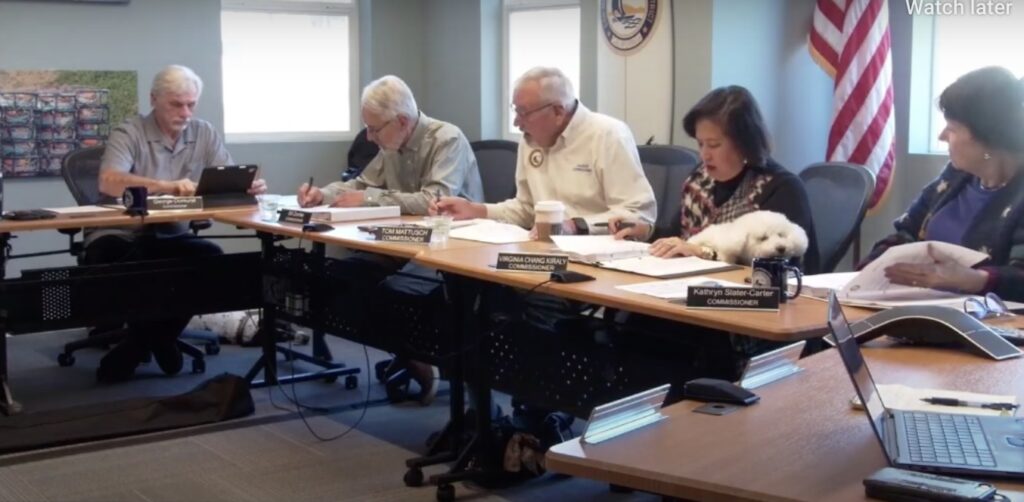
Kathryn Slater-Carter ~ District 3
Position: Chair
Term: 2023-2027
Email: kslater-carter@smharbor.com
George Domurat ~ District 2
Position: Vice Chair
Term: 2023-2027
Email: gdomurat@smharbor.com
William Zemke ~ District 1
Position: Secretary
Term: 2021 -2025
mail: wzemke@smharbor.com
Tom Mattusch ~ District 4
Position: Treasurer
Term: 2021-2025
Email: tmattusch@smharbor.com
Virginia Chang Kiraly ~ District 5
Position: Commissioner
Term: 2021-2025
Email: vchang-kiraly@smharbor.com
District Office: 504 Avenue Alhambra, Ste. 200, El Granada, CA 94018
Mailing Address: PO Box 1449, El Granada, CA 94018
Phone: (650) 583-4400 Fax: (650) 583-4614

Pillar Point without the harbor.


Shoaling will be dredged soon.


Author: mdrag
x