

|
Getting your Trinity Audio player ready...
|
NEWS. From TomKat Ranch on May 20th, 2026.
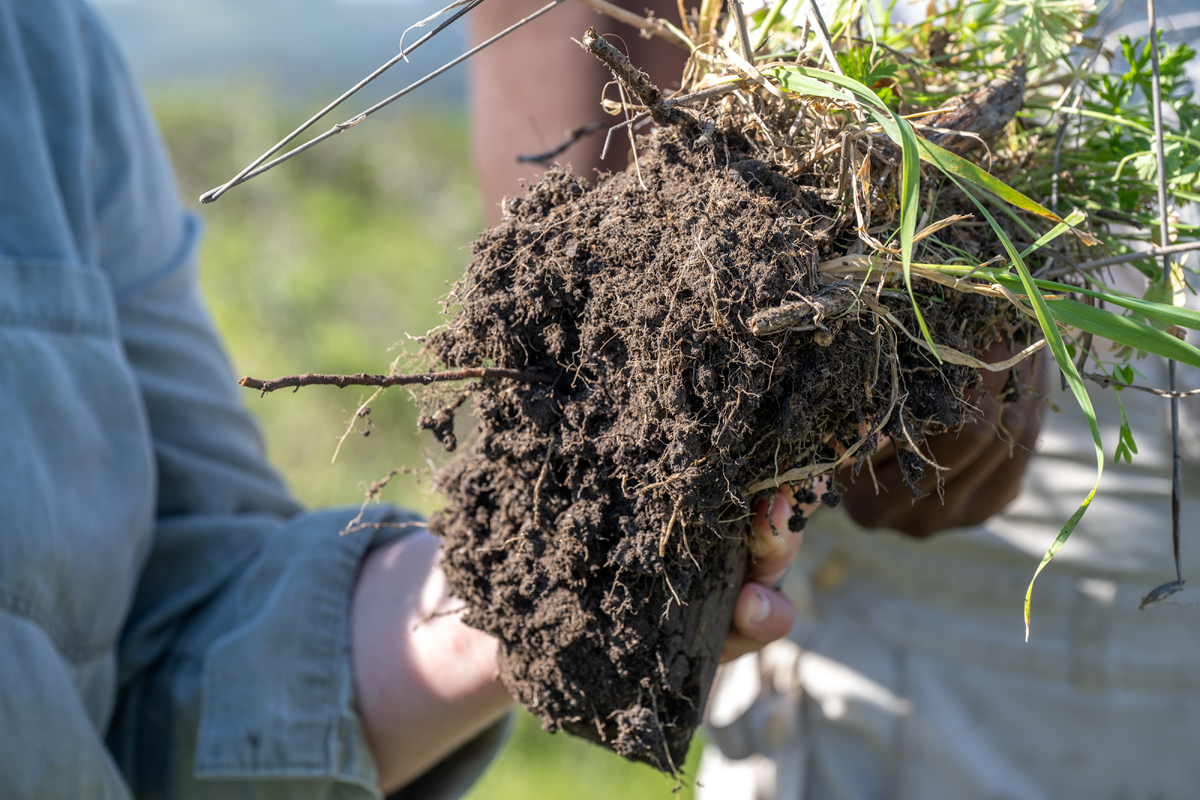
Hayley Strohm, TomKat Ranch Land Stewardship Manager, inspects a sample of the soil and root structure of a bale-grazed pasture.
05/20/2026
By Dakota Glueck
Photos by Bill Milliot
Over the past few years at TomKat Ranch, we have been exploring the practice of bale grazing. This involves feeding hay in the pasture with the expectation that cattle will “waste” 15-20% of it. This leftover hay mixes with urine and manure to form a deep, nutrient-rich mat that protects the soil and decomposes over the following winter. This decomposition adds significant nutrients and carbon to the soil. As a result, we have observed substantial increases in forage growth, forage quality, water infiltration, and soil organic matter.
Each year, we use bale grazing to improve our pastures and to learn how best to apply the practice across our landscape. Last year, we selected a field suffering from erosion caused by runoff from a historic ranch road, and another with significant soil compaction from its use as a winter holding pen for bulls and horses. Both cases presented new opportunities for a safe-to-fail trial.
This year, we bale-grazed using Italian Rye Grass (Lolium multiflorum) hay. Past trials with various hay types have shown that the choice of hay can affect the following year’s forage growth. We are always careful to avoid bale grazing in areas with healthy, established stands of native California grasses to prevent seeds from the hay from germinating and outcompeting native species.
Over the winter, the Land and Livestock Team, along with our collaborators from Point Blue Conservation Science, toured our previous bale graze sites. What follows are the images and metrics from that tour.
Name of the pasture: Moore South
Approximate date of bale grazing: Fall 2022
Condition of pasture pre-bale grazing: Low-growing Harding Grass (Phalaris aquatica), a non-native perennial.
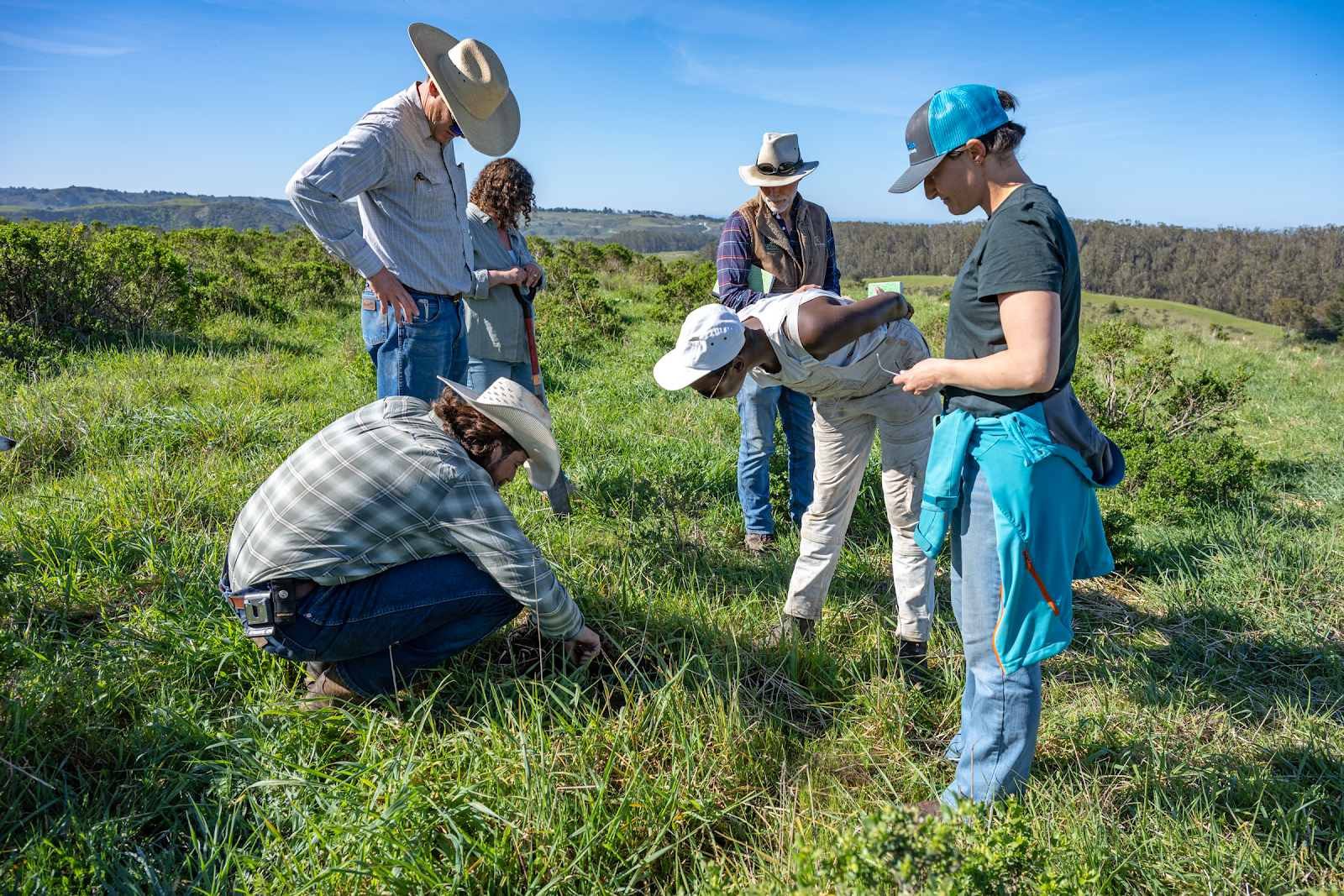
Current Observations: The Harding Grass benefited immensely from the bale graze, forming a thick sod. The soil beneath it shows increased aggregation and porosity.
Implications: This is the site of our ongoing trial. While forage production increased substantially, we observed a decline in biodiversity as forbs struggled to compete with the tall grass. Consequently, we introduced additional grazing pressure this spring to manage grass height and encourage diversity. We are refining our management to maintain high yields without losing wildflowers.
Name of the pasture: Stage North A
Approximate date of bale grazing: Fall 2024
Condition of pasture pre-bale grazing: We chose this site because it was starting to experience erosion and had generally low productivity.
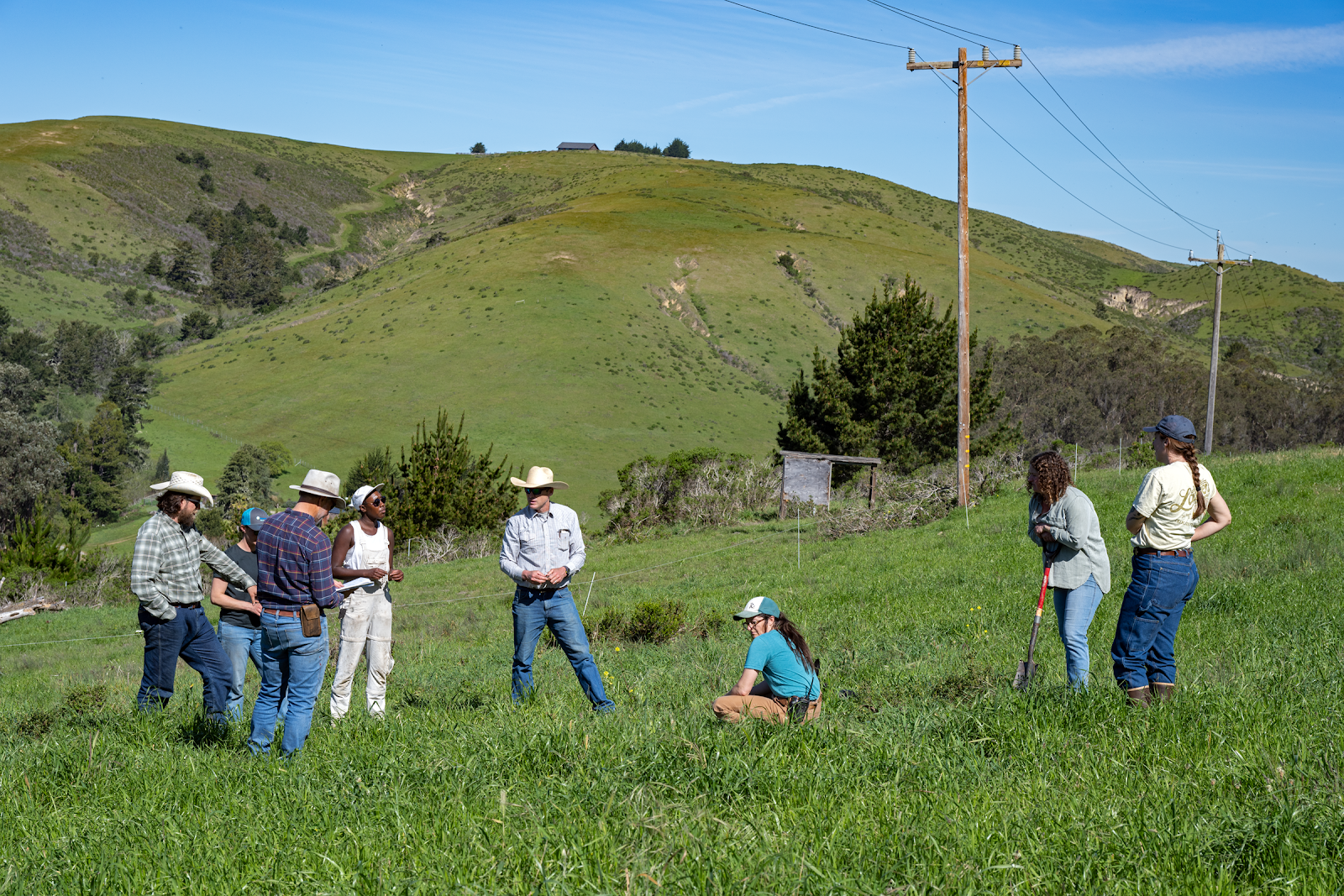
Current Observations: In 2025, we achieved three times the Animal Days per Acre (ADA) compared to pre-bale grazing levels. The Harding Grass is beginning to spread, and we have maintained good biodiversity by prioritizing appropriate rest and grazing intervals.
Implications: Located at the base of a steep slope, this site previously suffered from runoff erosion. It now effectively infiltrates runoff and captures nutrients within a thick grassy mat.
Name of the pasture: Stage North B
Approximate date of bale grazing: Fall 2025
Pre-Bale Grazing Condition: We selected this site due to significant erosion caused by a historic ranch road that diverted runoff here. The water was scouring topsoil, creating bare areas and a large gully. Forage was stunted, making it one of the ranch’s lowest-yielding areas.
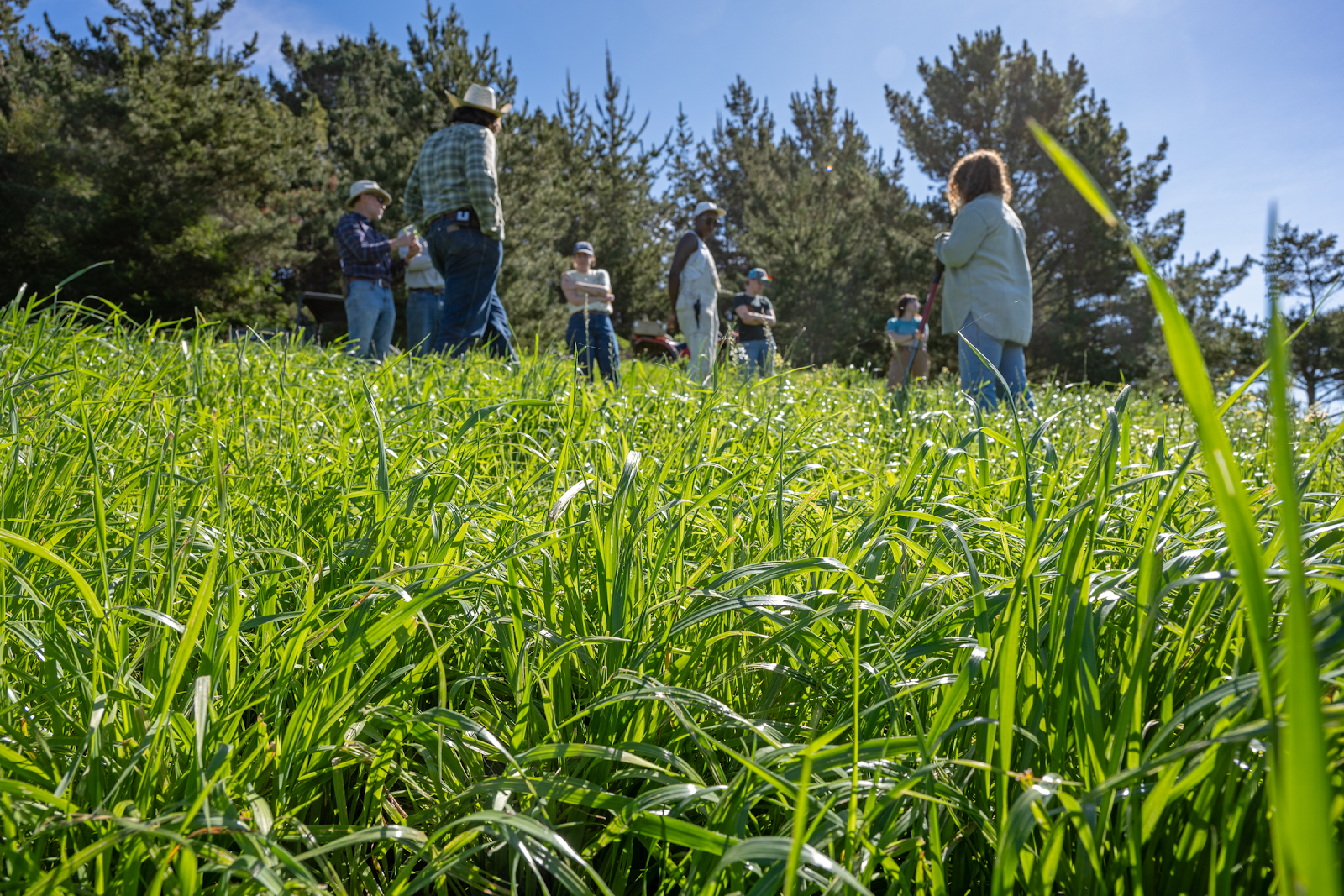
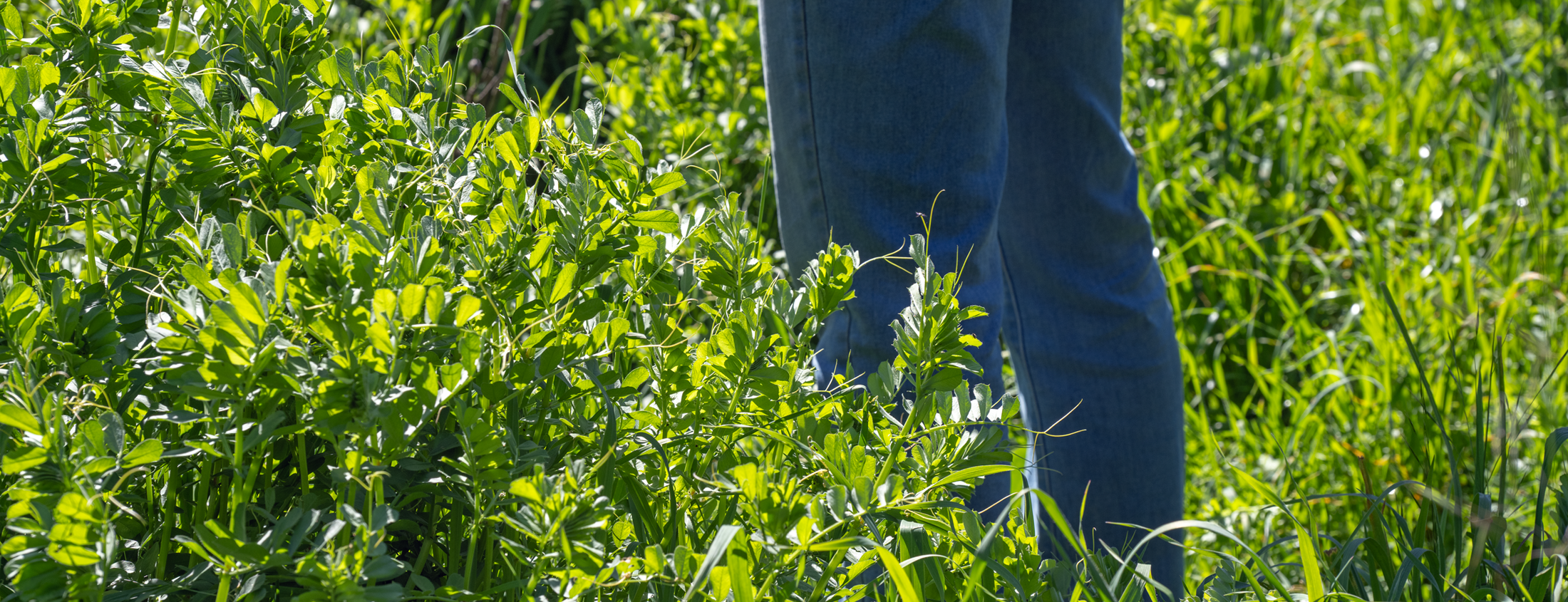
Current Observations: The area is now covered in dense forage. While Italian Rye from the bales is the primary species, we also see vetch and native fiddleneck. The soil is noticeably softer as the mat of hay continues to decompose.
Implications: We believe the erosion has been significantly slowed. This stability gives us time to repair the old road while the soil recovers. Because Italian Rye can become a monoculture, we will continue to monitor species diversity.
Name of the pasture: PRBO (photo series)
Approximate date of bale grazing: Fall 2025
Pre-Bale Grazing Condition: Historically used for winter horse grazing and bull pens, this site suffered from soil compaction and a shallow hard pan. Despite being bottom ground, the plant species mix was undesirable, consisting primarily of thistles and Slender Oats (Avena barbata). We bale-grazed 110 animal units here for two weeks, using electric fencing to provide three-day allotments of feed (12 bales total).
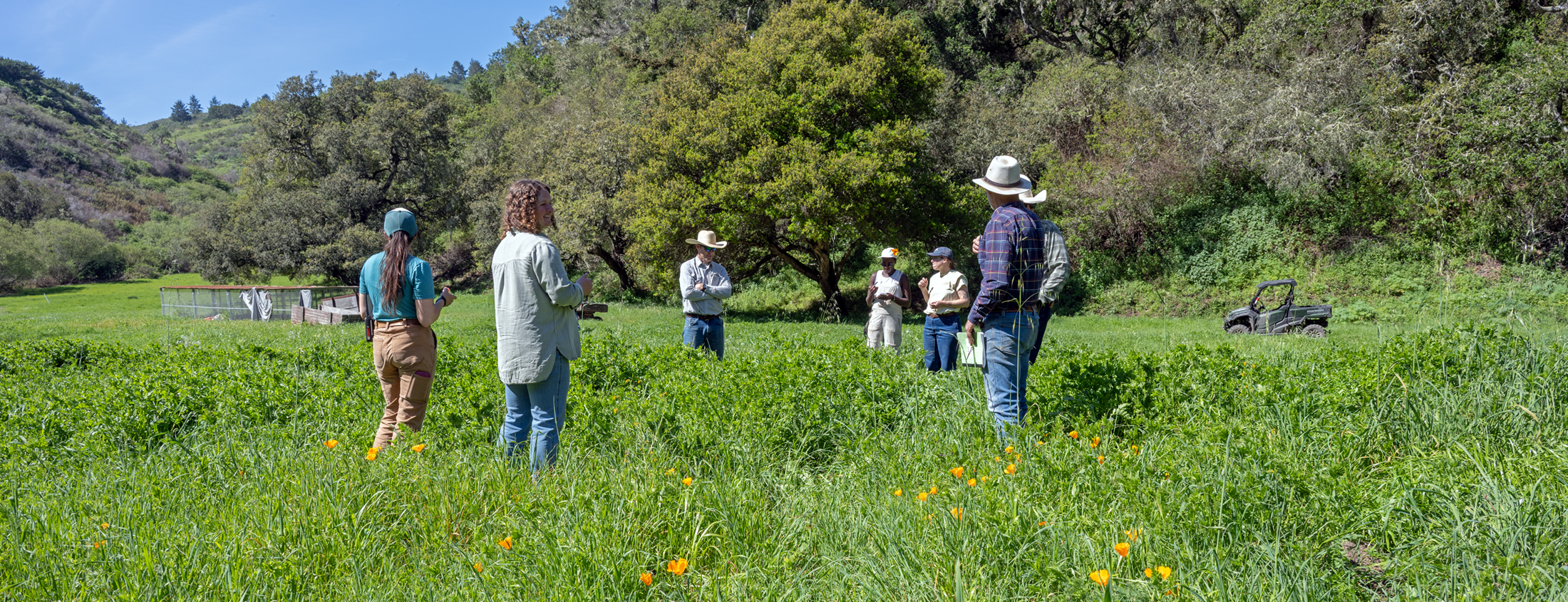
Current Observations: Forage yield in this first growing season has been fantastic. By March, the grass was waist-high! The site also boasts a high percentage of vetch, California poppies, and other forbs.
Implications: We are very pleased with these early results. We hope the site continues to improve and that the root systems of the new forage break up the compacted soil, addressing our long-term resource concerns.
PRBO Photo 1: Bales of hay set out for a bale-grazing trial at TomKat Ranch, October 2025
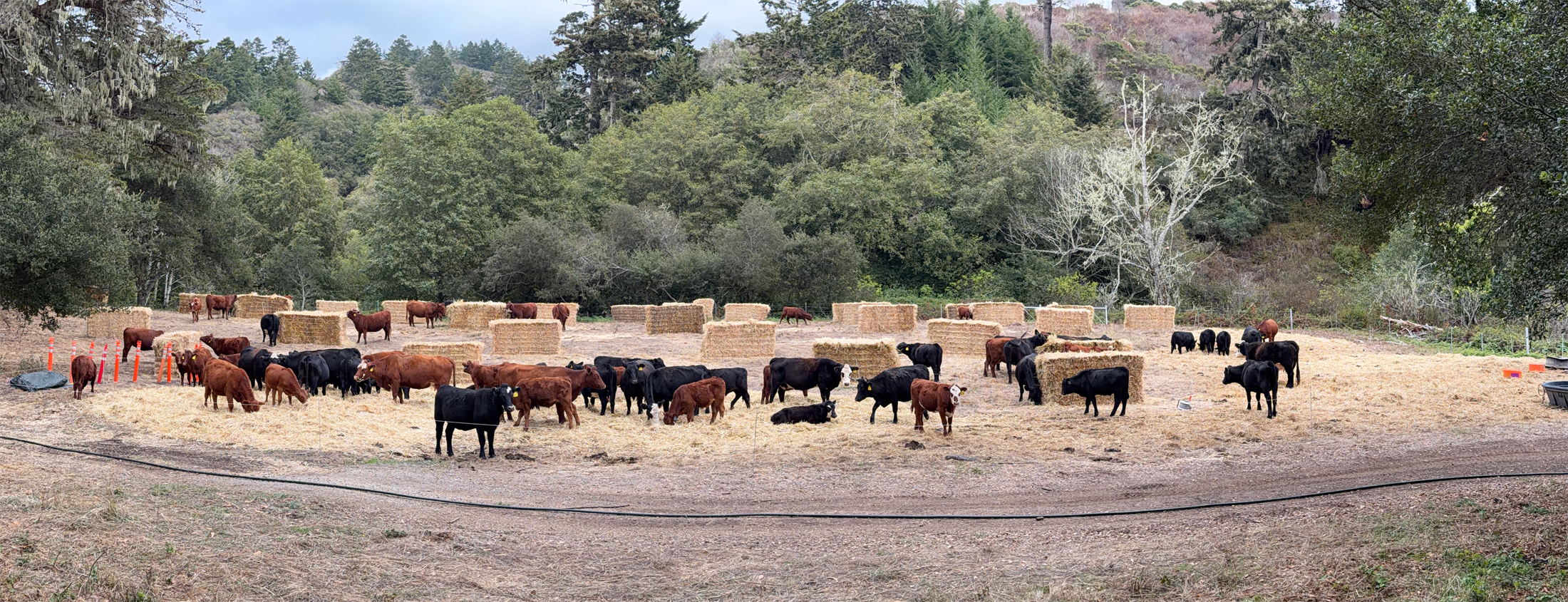
PRBO Photo 2: After the cattle were removed, November 2025
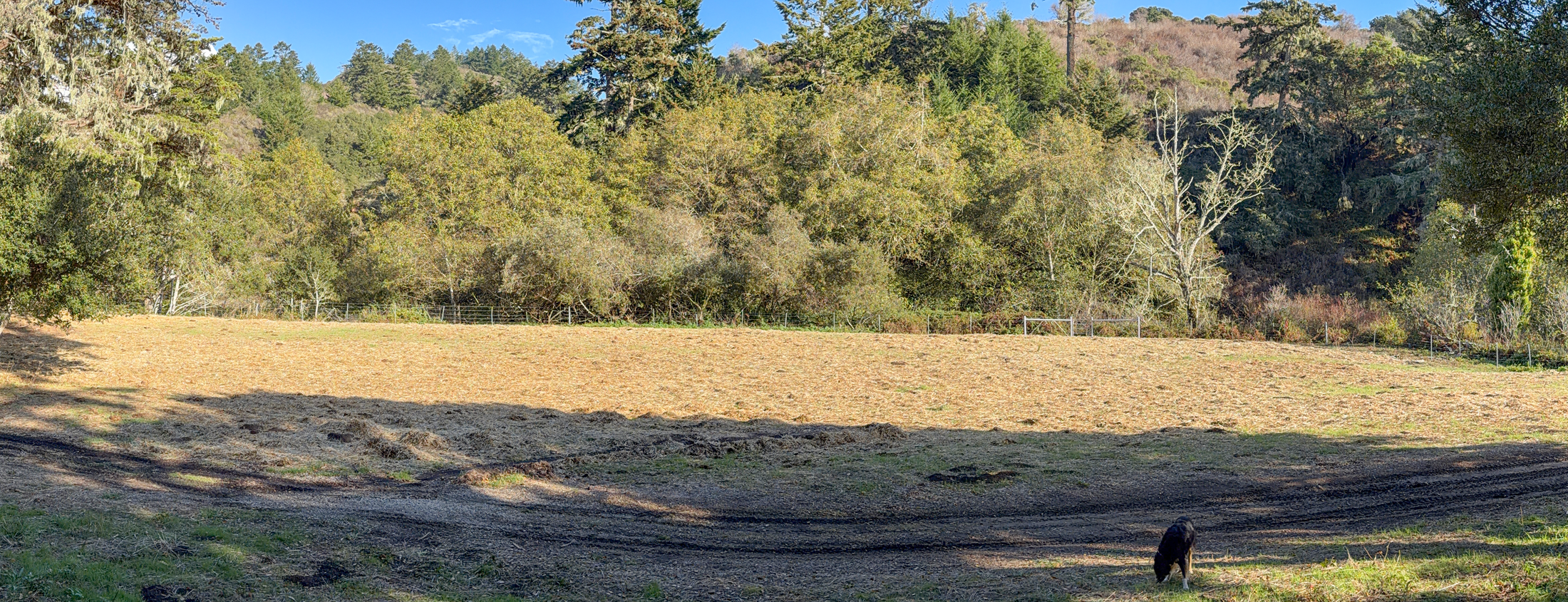
PRBO Photo 3: The results, March 2026
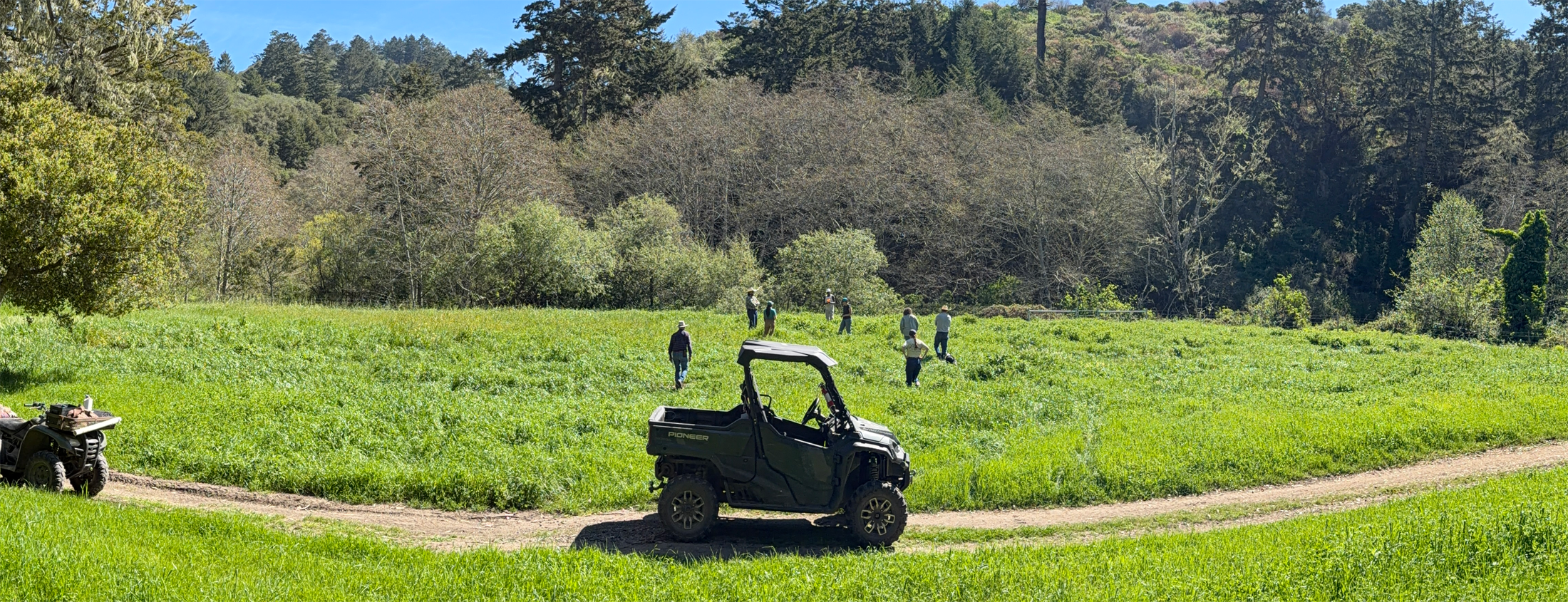
PRBO Photo 4: California Poppy coming through the grass
PRBO Photo 5: Italian Rye and Common Vetch
In Conclusion:
Bale grazing at TomKat Ranch began as a “safe-to-fail” trial, and we have refined our approach over the years. We have learned that bale grazing acts as a major ecological reset; species composition changes dramatically, particularly in the first year. Because the high nutrient concentration can damage native communities, we avoid bale grazing in areas with high biodiversity. Instead, we use it to address major resource concerns such as erosion or compaction. It serves as an effective “bandage” to help the land heal. We have also found that following up with intentional grazing helps the new nutrients cycle and accelerates the restoration process.
Our next step is to quantify the economics of bale grazing to determine if it is a viable practice to promote to other producers. In regions where feeding hay is a weather-related necessity, the economics are straightforward. However, for California producers who do not feed hay every year, the added cost can be significant. As we continue to collect results and understand the benefits of this practice for addressing resource concerns, we will be better equipped to inform producers about the true costs and opportunities of bale grazing.

Author: mdrag
x