
|
Getting your Trinity Audio player ready...
|
ARTICLE and LINKS. From Steve Diers, 33 Year Lyme Disease Advocate in August, 2025.
In Jake Sussel’s picture of a lizard, you can see it lost its tail recently, and is starting to grow a new tail. Losing its tail is a distraction, and a small snack, for the predator pursuing it.
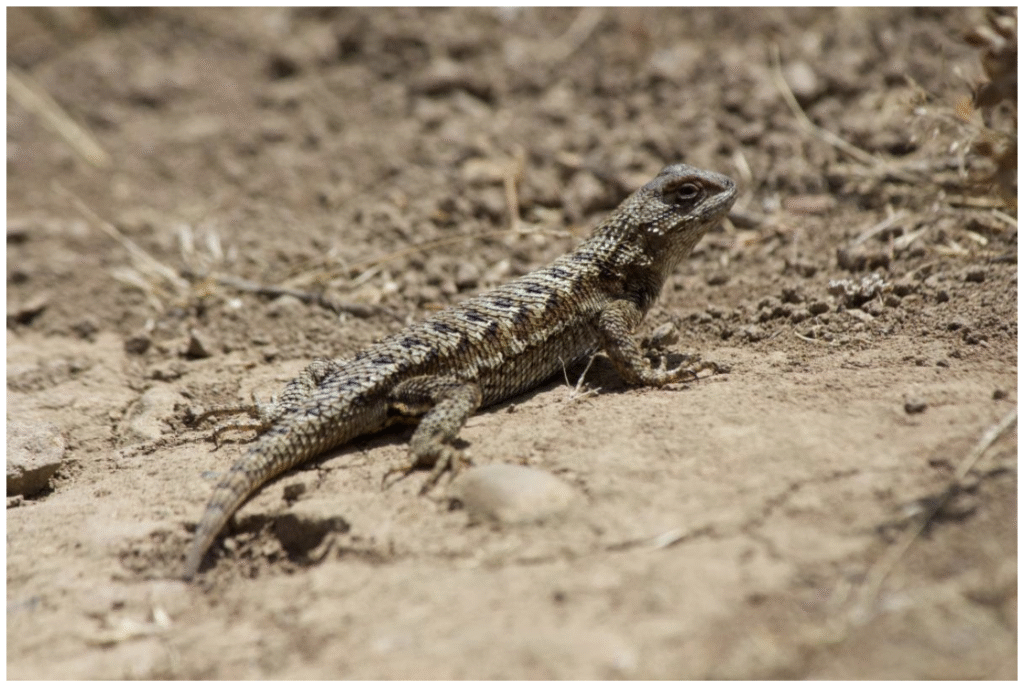
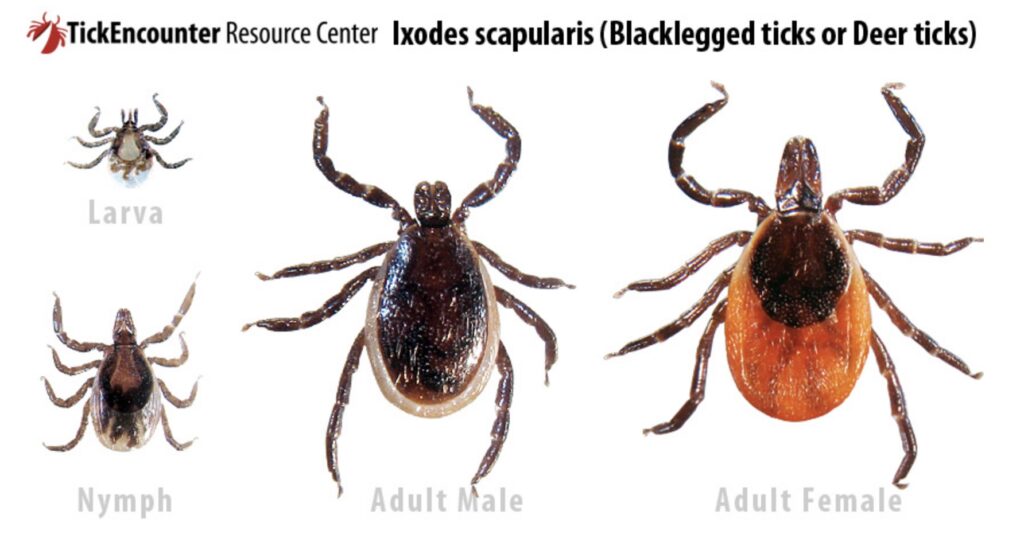
If a western black-legged tick nymph, carrying the Lyme disease bacteria in its gut, takes a blood meal from a western fence lizard. A protein in the lizard’s blood neutralizes the Lyme bacteria in the tick’s gut. Now this western black-legged tick nymph morphs into an uninfected western black-legged tick adult.
Oh, yes Virginia, there is Lyme disease in California! This is why the infection rate in western black-legged tick adults is 0 to 4% in California. The infection rate in the western black-legged tick nymphs in California is 2 to 15%. The infection rate of the western black-legged tick nymph in the Bodega Lagoon in 2022 was 31% in California. In the 1990’s the infection rate of western black-legged tick nymphs in Mendocino and Humboldt Counties in California was 40%. Most individuals who contract Lyme disease are bitten by an infected western black-legged tick nymph, the size of a poppy seed and don’t realize it!
Infected western black-legged tick adults and nymphs are found in almost every county in California. As are individuals suffering with Lyme disease and persistent Lyme disease.
Ticks need the three H’s; habitat, humidity, and hosts to survive. Where ticks can be found are in leaf litter, rotting logs, in the bark of live trees, rocks with vegetation growing on it, in your yard, on the vegetation on the edge of animal and recreational trails.The ticks are waiting to hitch a ride and a complementary blood meal. A tick can sense a potential blood meal 50′ away. This is by the body temperature ,carbon dioxide exhaled, and the body odor of the potential prey. In California there are 48 species of ticks. Infected western black-legged ticks More than any other US state!
The Tick Tackler Tutor # Impactful Tick Reduction Strategies for the Homeowner, Jennifer Meisenbacher Copyright 2024, Strategies for making your yard unfriendly for ticks without pesticides that can kill beneficial insects.
A host reservoir is an animal that carries disease but does not succumb to it. Some of the host reservoirs in California that the western black-legged ticks take a blood meal from along with a potental complementary disease. This includes the dusky-footed woodrat (Neotoma fuscipes), the California kangaroo rat (Dipodomys californicus), the brush mouse (Peromyscus boylii), the deer mouse (P. maniculatus), the piñon mouse (P. truei), dark-eyed junco (Junco hyemalis), and the western gray squirrel (Sciurus griseus). The six legged tick larva get a blood meal from a host reservoir and pass on the complementary disease when they morph into a 8 legged tick nymph.
Children ages 5 through 9 are at the highest risk for Lyme disease. Followed by youth between ages 10 through 14. https://www.lymedisease.org/children-highest-lyme-disease/ .
This disease is far, far worse in women than in men. Does Biological Sex Matter in Lyme Disease? The Need for Sex-Disaggregated Data in Persistent Illness www.dovepress.com/does-biological-sex-matter-in-lyme-disease-the-need-for-sex-disaggrega-peer-reviewed-fulltext-article-IJGM Understanding the unique burdens of Lyme on Women https://www.lymedisease.org/burdens-of-lyme-on-women/
Reduce Your Chances of a Tick Bite
Reduce your risk while in tick habitat … “as close as the backdoor of your house.”
- Wearing shorts, sandals, and a short-sleeved shirt in tick habitat is a “fool’s errand and an accident waiting to happen!
- ”Wear long pants, a long-sleeved T-shirt, closed-toe shoes, and socks!
- Wear light-colored long pants and long sleeves so you can easily see any ticks
- Tuck the shirt into the pants and tuck the pants into the socks.
Perform Tick Checks During and After Being in Tick Habitat. Tick Habitat is as Close as Your Backdoor!
This is one of the most critical prevention measures. Ticks, especially nymphal ticks, are tiny. Find and remove them before they bite. Inspect your clothing and exposed skin for ticks frequently when outdoors in areas with a high likelihood of ticks. Ticks may attach anywhere on the body, but on fully clothed people, they often attach to the scalp, behind the ear, or to an arm or leg. Pay particular attention to these areas when examining yourself or others.
Furthermore, examine your bedding for up to several days after exposure to tick-infested habitats (as close as your back door) for the presence of satiated (bloated state) detached ticks, which are easier to spot. Nymphs of the black-legged tick, once attached to human skin, are easily overlooked because of their tiny size and sometimes hidden feeding sites (such as the scalp).
However, fully satiated nymphs have been observed to detach from people during the night within as few as 3 days after exposure to ticks, and they are much easier to detect in a bloated state while digesting their blood meal among bedclothes, including one’s pillow.
Do a thorough tick check upon returning inside. Then throw your clothes in the dryer on high for 15 minutes on high. Any ticks on the clothes he will succumb from desiccation! Then put your clothes into your washing machine.
Although taking a shower may remove any ticks that are crawling on you. It will not wash off the ones that are already attached to you.
Check bedding, clothing, furniture, etc., for 36-48 hours following exposure for ticks that may drop off after completing their blood meal.
“There’s no safe amount of time to have a tick attached to you, but the earlier you get it off, the better chance it won’t transmit the pathogen(s).”
Due to their size, the western black-legged tick nymph very often transmits Lyme disease to a person without their knowledge. https://www.lymedisease.org/tick-lyme-transmission-time .
Lyme Symptoms
If you develop a rash, take a picture of it, as it will likely disappear with or without treatment. The rash only occurs in 34% of Lyme cases.
- Symptoms can appear 3-30 days after the bite.
- If you develop symptoms, I recommend that you record the date and time you were bitten, note when each symptom appeared, how long it lasted, and your current symptoms, to assist the Lyme Literate Doctor (LLMD) in diagnosis and treatment.
Early Symptoms of Lyme (most to least common) https://www.lymedisease.org/mylymedata-lyme-disease-research-report/
- Flu-Like Symptoms: unrelenting fatigue & recurring fever 64%
- Headache/Neck-Stiffness 44%
- Rash, Atypical 34%
- Joint Pain can affect the larger joints & achy muscles 30%
- Lightheadedness 29%
- Shortness of Breath/Chest Pain 28%
- Shooting Pains 25%
- Facial Nerve (Bell’s) Palsy 10%
- Perfect Bull’s Eye Rash 9% or less
Neurological Symptoms of Late/ long Haul/Chronic/Persistant Lyme (most to least common) https://www.lymedisease.org/mylymedata-lyme-disease-research-report/
- Fatigue 62%
- Joint Pain 40%
- Muscle Aches 31%
- Cognitive 30%
- Neuropathy 29%
- Sleep Impairment 20%
- Psychiatric 19%
- Gastrointestinal 17%
- Headache 16%
- Memory Loss 16%
- Heart-Related 8%
- Twitching 4%
QUESTIONNAIRE TO DETERMINE THE PROBABILITY OF YOUR HAVING LYME DISEASE AND OTHER AND OTHER TICK BORNE DISORDERS:
Horowitz Multiple Systemic Infectious Disease Syndrome Questionnaire
https://www.lymedisease.org/wp-content/uploads/2021/08/MSIDS-QUESTIONNAIRE-FINALR.pdf
- One Study demonstrated that delaying treatment by as little as 9-19 days after being infected is predictive of persistent Lyme symptoms. (Bouquet et al., 2016)
- During this time, infection can spread to the organs, brain, bone marrow, and heart. (Coughlin et al., 2018; Novak et al., 2019)
- Lyme carditis (heart block) occurs in approximately one out of every hundred Lyme disease cases reported to CDC.
The main difference between the Infectious Disease Society of America (IDSA), used by doctors who accept insurance, guidelines and those of the International Lyme & Associated Disease Society (ILADS) used by Lyme Literate Doctors, is that in the face of scientific uncertainty, the ILADS guidelines defer to clinical judgment and patient preferences while those of IDSA make strong recommendations against treatment and severely restrict the use of clinical judgment.
Where to find a Lyme Literate Doctor (LLMD) or Lyme Practitioners
- LymeDisease.Org: https://www.lymedisease.org/find-lyme-literate-doctors/
- Project Lyme: https://projectlyme.org/providers-landing/
- Global Lyme Alliance: https://www.globallymealliance.org/lymedoc
- International Lyme & Associated Diseases Society https://www.ilads.org/patient-care/provider-search/
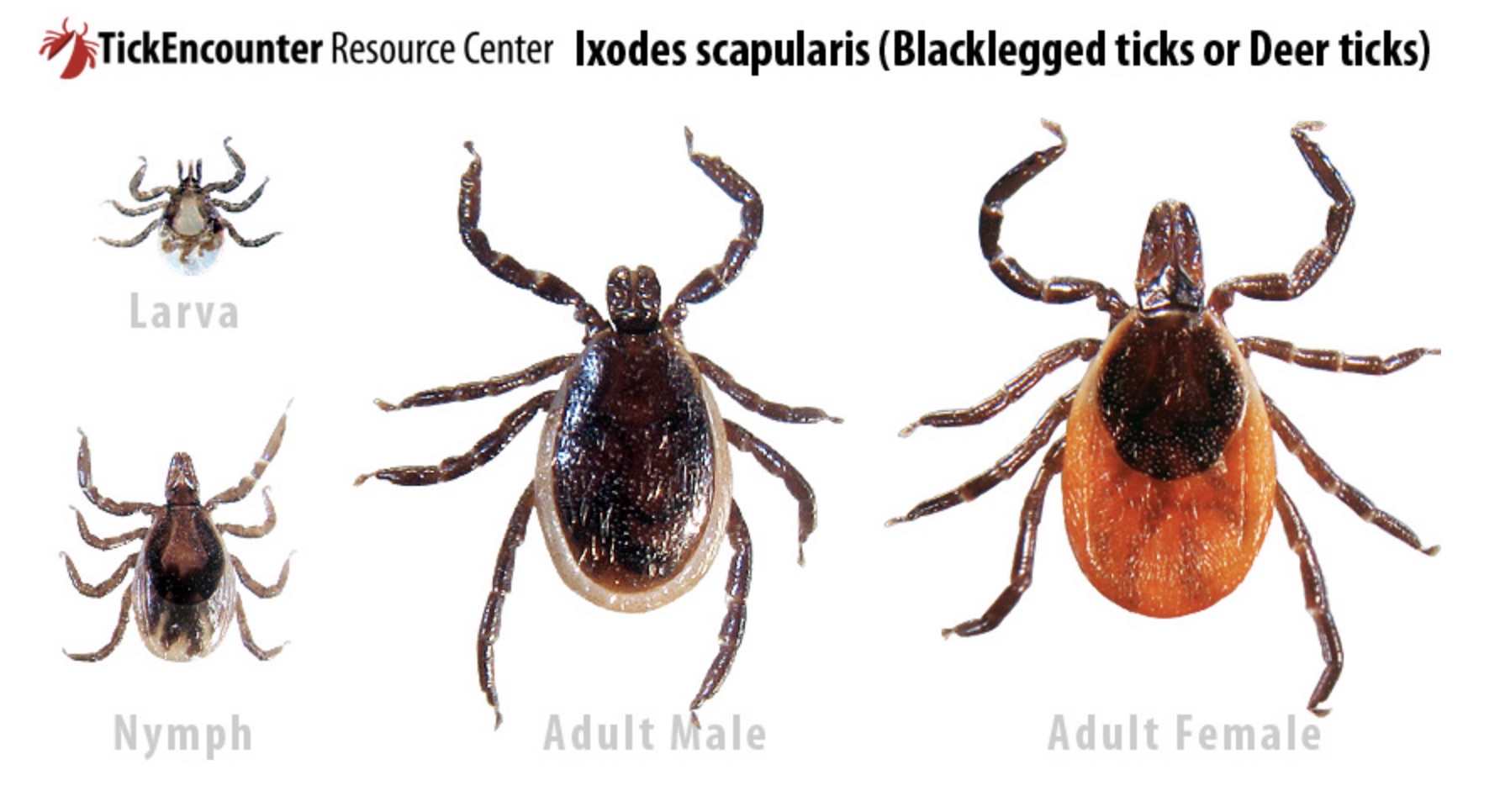
Lyme Co-Infections carried by the western black-legged (Ixodes pacificus) & the black-legged ticks (Ixodes scapularis). Lyme Coinfections & Distribution maps https://igenex.com/tick-borne-disease-testing/·
Lyme Patients’ Often Misdiagnosis with Other Conditions
The percentage of Lyme patients who are misdiagnosed with other conditions by doctors who accept insurance is staggering! This includes:
- Psychiatric Disorder “It is all in your head; Munchhausen syndrome; Lyme is not in this US state, county, or is it rare!” (52%)
- Fibromyalgia (44%)
- Chronic Fatigue (43%)
- Thyroid Disorder (26%)
- Rheumatoid Arthritis (17%)
- Multiple Sclerosis (12%)
- Systemic Lupus (9%)
- Learning Disabilities (6%)
- Parkinson’s, ALS, etc., which are difficult-to-diagnose and multisystem syndromes (5%)
Steve Diers Lyme disease & the Western Black-legged Tick Background
My wife, Stephanie, was bitten by ticks starting in the 1960’s and was misdiagnosed and not treated for tick-borne illness. In 1989 she and I, along with 15 other East Bay Regional Park District (EBRPD) employees who had been bitten by infected western black-legged ticks and developed Lyme symptoms, were sent to a Lyme Literate MD (LLMD). Doctor E Paul Lavoi, who was a Rheumatologist, and Internal Medicine M.D., F.A.C.P was in S.F. CA. Dr Lavoi was the first to diagnose the first 2 cases of Lyme disease in the far western portion of the US in 1977. Lyme was discovered in Lyme Connecticut in 1975, hence the name He said that Stephanie was the worst Lyme patient of the 800 to 1,000 patients in his practice. He started both of us on oral antibiotics. Stephanie was hospitalized because of the severe Jarisch Herxheimer reaction she had from the rapid die-off of Lyme bacteria and the toxins released into her body. As a result, a patient develops a fever, and all the symptoms are worse. Within a month I was back to full duty as an EBRPD Ranger. Stephanie lost her “dream job” as an EBRPD Naturalist and has been disabled since. She continues treatment for chronic neurological Lyme disease and two other tick-borne diseases to this day.
In the early 1990’s EBRPD sent all of us to an Infectious Disease Doctor who accepted insurance, Dr Joseph Marzouks. Dr Marzouks tested all of us for Lyme and all, but one came up positive. That was my wife, Stephanie. He claimed that she contracted the disease after she left EBRPD. That was impossible, as she had been bedridden and barely able to lift her head off her pillow since1989!
My wife’s Walnut Creek Doctor, James Lee, listened to Dr Lavoie and saved her life; first with minocin, then with IV antibiotics. Dr Lee contacted Doctor Joseph Burrascano, who provided Lyme disease diagnosis & treatment guidelines. Dr Burrascano said she should be on IV antibiotics for a year. Dr Lee provided her with these treatments. John Wells, her father, was treated by Doctor Lee for chronic Lyme disease also. In 1992 Doctors who accepted insurance could no longer treat Lyme disease with IV antibiotics. As a result, Doctor James Lee told my wife, my wife’s parents, and me” that his hands were tied” and he could no longer treat her with IV antibiotics or her father with oral antibiotics for chronic Lyme disease.
After 14 years as an EBRPD Ranger at Sunol/Ohlone Wilderness, I secured an EBMUD Ranger/Naturalist II job in the Sierra Foothills in June of 1990. My wife’s life was a living hell (intractable pain), suffering from Persistent/Long Haul/Chronic Lyme disease plus 3 tickborne diseases. I had been reading or listening to about 100 other Chronic Lyme patients’ stories about their challenges with diagnosis and treatment. All of them were the same as Stephanie’s story … it was like listening to “a broken record.” This was when I started researching ticks and Lyme. This was so I could share this information with others so they would not have to go through the living hell that my wife continues to go through for 50+ years of her 69 years.
Starting in the 1990’s I would receive phone calls or emails from many individuals who have been bitten by western black-legged ticks and want advice on what to do, had symptoms of Lyme disease or want the name of a Lyme Literate Doctor in California (of which there was just a handful at that time). Also, I received requests and conducted Ticks & Lyme Disease Hazards in California safety training for Volcano Telephone Company, P G & E, EBMUD Staff &Volunteers, and at the California State Trail Conference and the National Trails Conference.
At these presentations I conducted for the public in Calaveras & Amador counties I showed the 2002 Lyme Disease documentary film “Under Our Skin.”
Starting in 2009 as a member of the EBMUD Tick & Tick-Borne Disease Committee I attended meetings, and we developed the following. The guidelines for staff to protect themselves from bites, Personal Protective Equipment (PPE’s) for staff and the protocol for reporting the bite Drafted the EBMUD Tick & Lyme Brochure Worked with the Lyme Disease Organization staff to develop an up-to-date Tick and Lyme disease safety training for EBMUD employees.
Beginning in 2010 I helped California State Vector Control Biologists collect ticks on one-half mile of trail in Calaveras County annually for a number of years. In April 2013 we collected 328 adult western black-legged ticks, 6 nymphal American Dog ticks and numerous adult American dog ticks on a 1/2 mile of trail. Seeing 4-5 adult blacklegged ticks questing on at the end one blade of grass on this one-half mile of trail was common in March-April.
In 2011 at the California State Trails Conference, I did two 1-hour sessions on “The Most Dangerous Animal on Trails.” Those attending gave me 5 out 5 on the information in my presentation that was so important to their safety and that of the trail users.
Years prior to this I did a session at the National Trails Conference on “The Most Dangerous Animal on Trails.”
In March and April of 2014, I was bitten by black-legged ticks while working on trails on EBMUD. By June I could no longer do my job, i.e., responding to wildland fires, and cognitive tasks, etc. I used up my sick leave, vacation leave, compensating time and holiday leave. Then EBMUD employees donated vacation leave so I could retire with 25 years of service!!! In July of 2015 I retired from EBMUD as a Ranger/Naturalist II. In February of 2017, my wife and I moved from our home of 27 years in the Sierra Nevada Mountains to Half Moon Bay to be closer to LLMDs in Foster City.
In May and June of 2019, I conducted four1.5-2-hour PowerPoint presentations on Tick & Lyme Hazards in California for the public in Half Moon Bay CA. Some individuals with Chronic Lyme disease were present at these presentations.
In May and June of 2019 I conducted four 1.5 hour powerpoint presentations in Half Moon Bay, California.
On July 13, 2023, I delivered a 45-minute presentation on “Ticks & Lyme Hazards in California.” This was before showing the 2022 Lyme documentary, The Quiet Epidemic, As Close as Your Backyard film.
I have been researching black-legged ticks and the diseases they carry and sharing information on these topics for 33 years. My research began with correspondence with Phyllis Mervine, the President of the California Lyme Disease Association (CALDA). CALDA later became LymeDisease.Org. This included correspondence with Robert Lane, Professor Emeritus of Medical Entomology, Department of Environmental Science, Policy and Management, University of California, Berkeley, CA, from the 1990s to the present.
World-renowned medical entomologist Dr. Robert Lane has studied California ticks for over 40 years. His many accomplishments and pioneering tick studies include the discovery of Borrelia bissettii, later named bissettiae, in California.
[1]; the identification of the western gray squirrel as the primary reservoir host for Lyme disease in California woodlands
[2]; and his legendary 1982 collaboration with Dr. Wilhelm ( Willy) Burgdorfer on the first large-scale study of North American ticks, which identified Ixodes pacificus as the vector for Lyme disease in CA
[3]. 1. Postic D, Ras NM, Lane RS, Hendson M, Baranton G. (1998) Expanded diversity among Californian borrelia isolates and description of Borrelia bissettii sp. nov. (formerly Borrelia group DN127). Journal of Clinical Microbiology. http://jcm.asm.org/content/36/12/3497.long2. Lane RS, Mun J, Eisen RJ, Eisen L. (2005) Western gray squirrel (Rodentia: Sciuridae): a primary reservoir host of Borrelia burgdorferi in California oak woodlands. Journal Medical Entomology.May;42(3):388-96. https://www.ncbi.nlm.nih.gov/pubmed/159627923. Burgdorfer W, Lane RS, Barbour AG, Gresbrink RA, Anderson JR. (1985) The Western Black-Legged Tick, Ixodes Pacificus: A Vector of Borrelia Burgdorferi. The American Journal of Tropical Medicine and Hygiene. Volume34, Issue 5. DOI: https://doi.org/10.4269/ajtmh.1985.34.92
TICK ALERT: 2021 May Be Big Lyme Disease Year at Northern California Beaches;
Want to Learn More About Ticks and Lyme Disease From Ranger and Naturalist Steve Diers?;

Author: mdrag
x