
|
Getting your Trinity Audio player ready...
|
AGENDA. From the San Mateo County Board of Supervisors regular meeting on Tuesday, June 16th, 2026 at 9:00am, as a hybrid meeting with remote comment. Agenda. Staff Report for Item #9.
To: Honorable Board of Supervisors
From: Supervisor Ray Mueller, District 3
Subject: Development of Ordinance Creating a Comprehensive Permitting Process Governing the Commercial Deployment and Operation of Humanoid Robots
RECOMMENDATION
Adopt a resolution directing the County Executive’s Office, County Attorney, and County Departments to develop an ordinance for the Board’s consideration, creating a comprehensive permitting process governing the commercial deployment and operation of humanoid robots within San Mateo County.
BACKGROUND
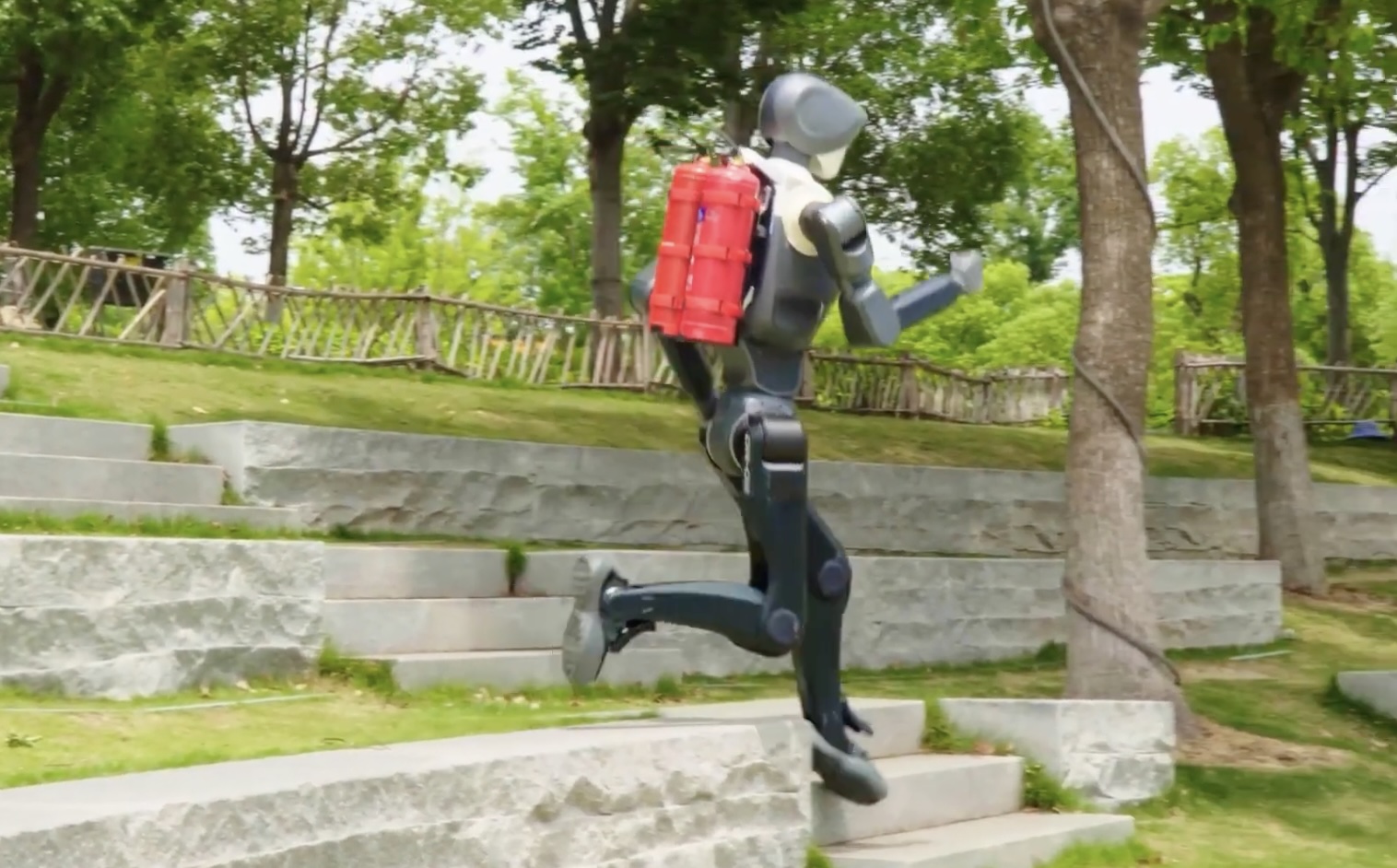
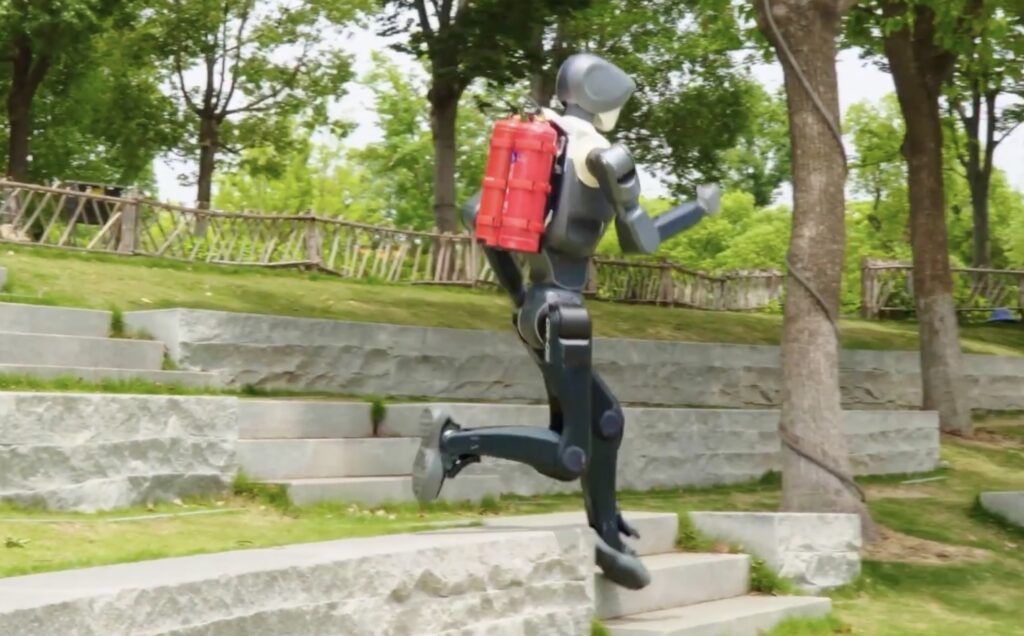
Rapid advancements in artificial intelligence (AI), and robotics have accelerated the development and commercial availability of untethered, autonomous or semi-autonomous humanoid robots (Mobile Humanoid Robots) capable of performing tasks traditionally carried out by human workers. These systems are increasingly being designed for deployment across a broad range of industries, including restaurants, hospitality, retail, logistics, security, facilities maintenance, customer service, public information, and emergency response support.
Although California law regulates autonomous vehicles and establishes workplace safety standards applicable to certain technologies, there is currently no comprehensive regulatory framework governing the commercial deployment and operation of humanoid robots in publicly accessible environments.
As businesses continue to evaluate and adopt these emerging technologies, San Mateo County currently lacks a comprehensive permitting and regulatory framework establishing consistent standards for the deployment and operation of these systems, including requirements related to public safety, accessibility, cybersecurity, privacy, emergency response coordination, operator accountability, and a mechanism to recover costs associated with emergency response. This gap is particularly significant given that many of these technologies rely on lithium-ion battery systems, which are susceptible to a phenomenon known as “thermal runaway,” a condition that can result in rapid ignition, repeated re-ignition, and the release of highly toxic gases. Thermal runaway incidents require specialized first-responder training, extended containment and monitoring protocols, dedicated hazardous materials (HazMat) resources, and firefighting capabilities that exceed those required for conventional structural fires, creating additional operational demands and costs that should be addressed through an appropriate permitting and cost-recovery framework.
Although Mobile Humanoid Robots are not yet widely deployed in commercial settings, continued advances in AI, machine learning, and robotics are expected to accelerate the development, commercialization, and deployment of autonomous and semi-autonomous robotic systems. As these technologies continue to evolve, evaluating the historical safety performance, manufacturing track record, and recall history of Mobile Humanoid Robot units is necessary to help prevent the deployment of defective, recalled, and inadequately tested technologies in public-facing spaces and ensure they meet established safety and reliability standards.
Establishing a permitting framework in advance of widespread implementation will enable San Mateo County to provide regulatory certainty for businesses, protect public health and safety, preserve privacy and accessibility, and encourage the responsible integration of emerging technologies in a manner that serves the public interest.
DISCUSSION
The resolution is intended to lead to establishment of a comprehensive permitting program governing the commercial deployment and operation of humanoid robots within San Mateo County’s jurisdiction. It is not intended to prohibit the use of robotic technologies. Rather, the permitting program would establish clear, consistent standards that encourage responsible innovation while protecting public health and safety, preserving public trust, safeguarding privacy and accessibility, and providing businesses with predictable regulatory expectations. The framework also provides for the collection permitting fees to support the specialized response required for fire related incidents related to the power systems for this technology.
The County Attorney has reviewed and approved the proposed resolution as to form.
COMMUNITY IMPACT
This resolution sets forth the Board’s desire that staff develop, for the Board’s consideration, an ordinance creating a comprehensive permitting system for the deployment and use of Mobile Humanoid Robots by businesses to protect the health, safety, and general welfare of San Mateo County residents.
FISCAL IMPACT
Future fiscal impacts will depend on the number of permit applications and staffing required to administer the permitting within the San Mateo County Building and Planning Department and other appropriate Departments deemed necessary.

Author: mdrag
x